


11 April 2025
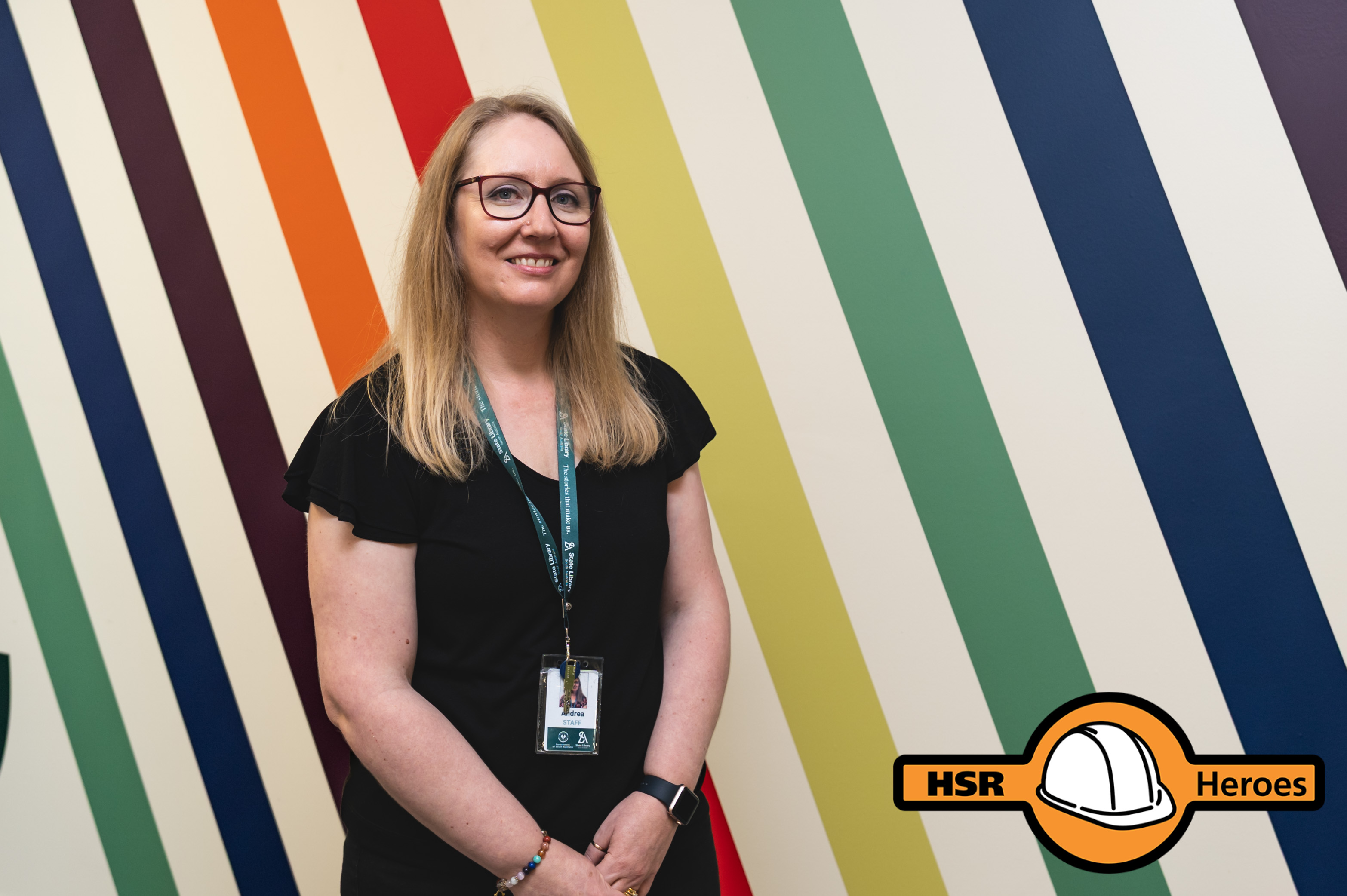
A previous career as a lab scientist provided Andrea Hensing-Matto with a solid foundation in workplace safety that has developed into a lifelong passion.
“Safety is everyone’s responsibility, but it starts with yourself and it’s part of who I am,” Andrea says.
Two decades ago, Andrea pivoted into audio engineering in the creative arts sector and she has worked at the State Library of South Australia for the past 10 years.
Andrea was elected as a Health and Safety Representative in 2021. Although she has just finished up as a HSR to continue in the role of Mental Health First Aid Officer and changed work duties, Andrea continues to promote a safety mindset in her workplace and support other HSRs at the library.
This week SafeWork SA is proud to recognise Andrea’s achievements as part of the HSR Heroes program.
We caught up with Andrea to talk about her time in the HSR role.
Q: When did you first become interested in safety?
A: Before I started a career in audio, I was a scientist and worked in a laboratory where there were very strict rules around WHS, particularly in manual handling, equipment with moving parts and chemical handling.
That set me up with a positive attitude towards safety in the workplace. Moving into audio engineering in the creative arts, which I’ve now been in for 20 years, you must be responsible for your own safety, and you have to be aware of the environments you’re working in.
You have to be aware of the necessary PPE such as hearing protection. Manual handling is also a big one and just being aware of yourself and your surroundings because safety starts with you and then you can focus on others you are working with.
Q: Why did you become a HSR?
A: I had been in a permanent position at the library for a couple of years and because I work in the AV studios it’s quite an isolating job. I don’t have a huge amount of interaction with other people so I thought that putting myself up as a HSR would create an opportunity to get to know others in the workplace and to be a little more visible.
It definitely provided that opportunity to get to know others and for them to get to know me and share that safety attitude within the workplace.
Q: Did you do any HSR training and did you find it useful?
A: I did my annual training in all three years at the SA Business Chamber. What I really liked about the training was the short presentations we did in year one and year two. It allowed us to take a WHS example from our workplace and apply it in the real sense of safety. One of them was about the building of the audio studios we’ve got here in the library. That came out of a real need for a safe working environment for the sound engineers to help protect their hearing because you need to have a quiet environment to listen critically to the recordings that we are working on in the collection.
The second example was around the handling of films that have high acid levels.
Acetate film can suffer from a condition called vinegar syndrome. What happens is there are vinegar fumes that are released from the film itself and exposure to that can be very dangerous because if you breathe it in it can cause lung irritation, skin irritation, eye irritation and all sorts of things.
My second-year presentation was around the moving of those films into our cold storage facilities and the measures we had to put in place for the move such as PPE, regular breaks and working in pairs to make sure we were all aware of what we were doing in that space.
The SA Business Chamber trainers were all excellent. The knowledge they have and the way that they shared it was so valuable to me.
Q: What achievements as a HSR are you most proud of?
A: Part of what I did as a HSR was to be part of a big team that did a review, consolidation and update of all our risk assessments and safe operating procedures (SOP). Some of that work has been shared with the other cultural institutions in the precinct.
Even though I am not in an elected role now, I am still participating in worksite visits and inspections. I am happy to chat with anyone about safety issues and I am still active in looking at risk assessments and the SOPs, it’s just that I am not doing it in a HSR capacity.
I have completed my three years and I have really enjoyed that time but I am just taking a half a step back.
I still work very closely with the elected HSRs and my attitude towards safety will never change but I am now taking on other roles such as the Mental Health First Aid Officer and changed work duties.
Being a HSR really embeds what the safety culture is and I can still continue to pass that on to others within the workplace.
Q: What would you say to someone thinking about becoming a HSR?
I think it’s a great opportunity. It’s an opportunity to get to know people in your workplace, it’s also an opportunity to become aware of what the current safety considerations are.
Working in an institution like this, it’s a really different type of workplace – we’re not your traditional office and particularly the studios I work in have different safety pressures and just having that embedded knowledge it feels like I can communicate that to others in the workplace and really contribute to all of our safety.
Now with the new psychosocial regulations and a shift in focus into that area, sometimes you feel there is a bit more pressure on the front-end customer service staff. They are the ones working with the public and are exposed to the more difficult interactions at times.
Having the HSR training gives you the current safety knowledge so you can encourage your co-workers to share a safety mindset which can only benefit the whole workplace.
Further links: