


Managing fatigue risks at work
Fatigue can arise from both work-related and non-work-related factors. It’s important to understand how these factors, individually or together, can impair a workers’ physical, mental or emotional capacity and create risks to health and safety.
What is fatigue?
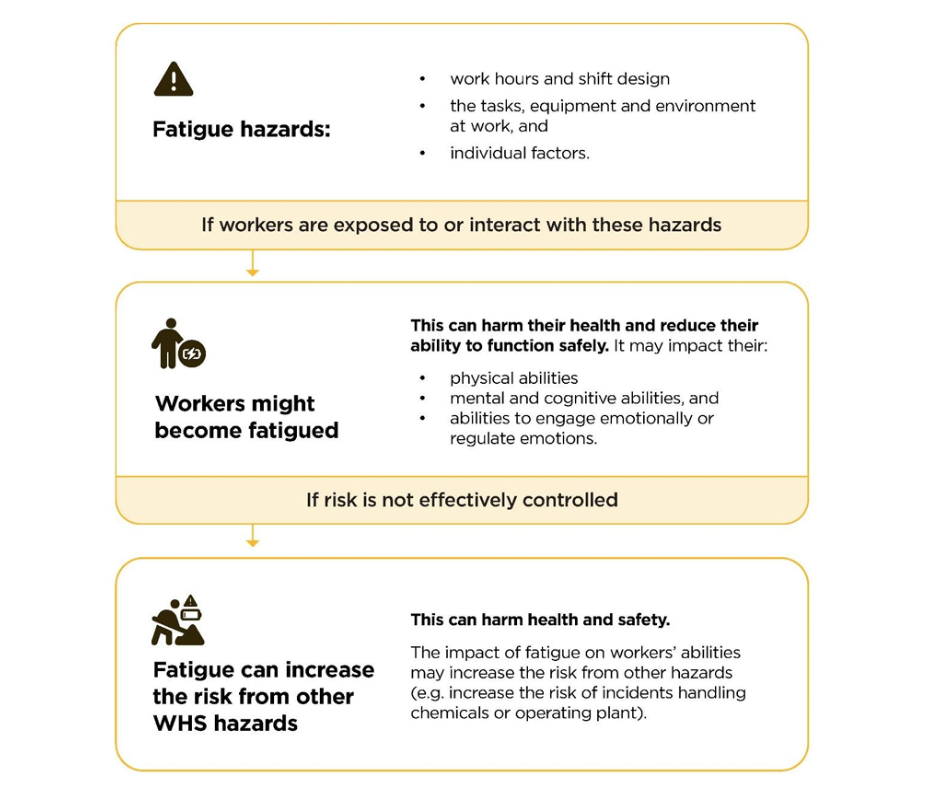
Fatigue is a state of physical, mental or emotional impairment. Fatigue can develop over the short or long term and can prevent people from functioning safely as well as have health impacts.
In a work context, fatigue is more than feeling sleepy, tired and drowsy. It is a state of impairment which can impair:
- physical abilities like coordination, strength and reaction time
- mental and cognitive abilities like decision making and concentration
- emotional abilities like engaging with others or regulate emotions.
- Or a combination of any of the above.
Causes of fatigue
Fatigue can be caused by a range of hazards broadly grouped as:
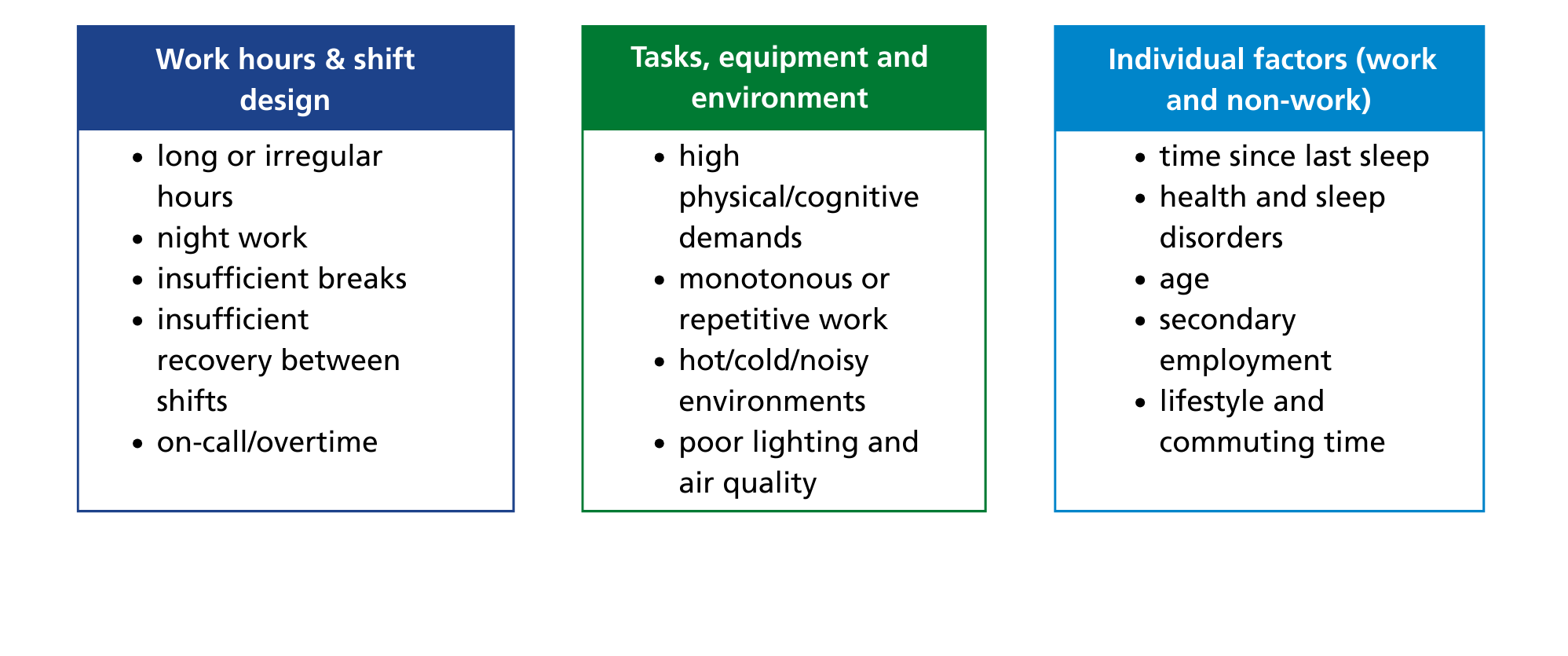
Note. Appendix C of the Model Code of Practice – Managing the risk of fatigue at work provides guidance on identifying, assessing and
controlling fatigue risks for each of the categories above.
Refer to: La Trobe University (2024) Rapid review on evidence of managing the risks associated with fatigue. The report provides an overview of the current research evidence on fatigue.
Fatigue implication
Fatigue is a work health and safety risk that can impair a worker’s physical and psychological capacity to perform work safely. It may contribute to psychological harm (such as psychological distress) and physical harm (including musculoskeletal disorders).
Fatigue can also increase the likelihood of incidents and injuries due to reduced alertness, slower reaction times, impaired judgement and decreased concentration. These effects may compromise both health and safety outcomes and overall work productivity.
Managing the factors that may cause workers to become fatigued is generally more effective and reliable than attempting to deal with the consequences once a worker is fatigued. This approach reflects the risk‑management principles set out in the model Code of Practice.
Duties under WHS laws
A Person Conducting a Business or Undertaking (PCBU) must ensure, so far as is reasonably practicable, workers and other persons are not exposed to risks to their physical and psychological health and safety, including the risk of fatigue. A PCBU must eliminate health and safety risks at work, or if that is not reasonably practicable, minimise these risks so far as is reasonably practicable. This duty aligns with the WHS requirement to manage fatigue as a hazard that can impair a worker’s ability to function safely
Workers must take reasonable care for their own health and safety and not do anything which could adversely affect the health and safety of other persons. Workers must also comply with any reasonable health and safety instructions given by the PCBU and cooperate with reasonable health and safety policies or procedures that have been communicated to them, including those related to managing fatigue. For example, this may include following policies on working second jobs or notifying the PCBU if they are becoming fatigued or are already fatigued.
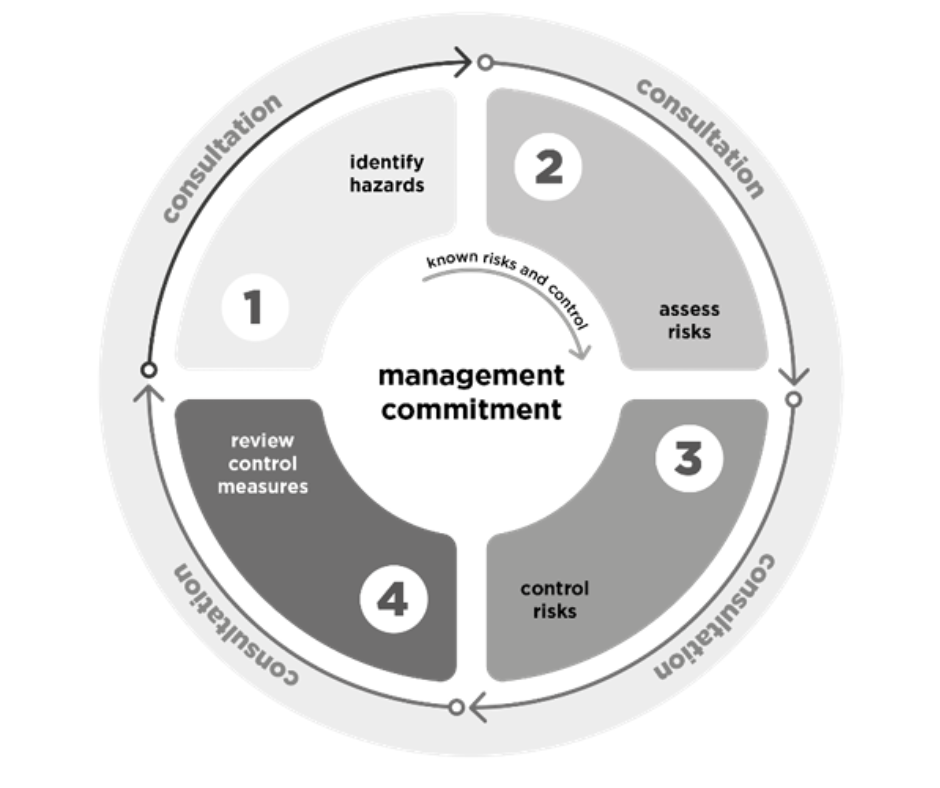
Four-step risk management process
Manage fatigue risks using the same systematic process as other WHS hazards, as outlined in the Model Code of Practice.
Identifying fatigue-related hazards involves understanding which aspects of work and workplace conditions expose workers to fatigue, and whether existing controls are effectively eliminating or minimising those risks.
Fatigue often results from a combination of hazards, rather than a single factor. The likelihood of harm increases when exposures such as long work hours, poor conditions, inadequate breaks and high job demand occur together, and where these exposures are repeated, prolonged or severe.
Fatigue hazards vary significantly across industries and roles. When identifying hazards, consider the specific work context. For example:
- Healthcare - night work, shift work and high emotional demands
- Professional services - high cognitive demands and long working hours
- Transport - long driving hours, irregular schedules and driving tasks
- Emergency services - unpredictable work patterns and high cognitive demands.
Refer to the Model Code of Practice – Managing the risk of fatigue (p17-19) for a range of example that may increase fatigue risks.
How to identify fatigue hazards
PCBUs should identify:
- hazards that cause fatigue, and
- situations where fatigue increases other WHS risks.
Use multiple sources of information and look for trends, including:
Review planned work |
Consider work hours, shift design, tasks, equipment, environments, systems of work and safety-critical activities such as driving. Account for foreseeable changes like delays, interruptions or increased workloads. |
Consult workers |
Talk with workers about where fatigue occurs and encourage reporting through your internal reporting system. Surveys could be a good consultation way to proactively seeking information that may lead to fatigue and ways to address it. Self-assessments tools could also help workers in identifying their own fatigue level. |
Inspect and observe the workplace |
Look at physical conditions that may contribute to fatigue (e.g. extreme heat or cold, high noise levels, poor air quality, poor break facilities) and how work is actually performed, including physically or mentally demanding tasks. |
Review records and data |
Review and analyse relevant information such as work hours, rosters, incidents, injuries, compensation claims, complaints, staffing levels, leave and absenteeism to identify patterns of fatigue risks. |
Seek reliable advice |
Use guidance from industry bodies, unions and consult with technical specialists, particularly for high-risk or complex work. |
Monitor workers and conditions |
Monitor workplace conditions and signs of fatigue such as reduced alertness, impaired judgement and increased errors / reduced performance. Technology may assist but should be used as part of a broader approach. |
Look for trends |
Using information from multiple sources over time helps identify tasks, roles or shifts with higher fatigue risk and supports effective risk management. |
Assessing fatigue risks helps PCBUs determine what is reasonably practicable to do in managing the risks.
A fatigue risk assessment can help to:
- identify which workers may be exposed to fatigue
- understand what hazards, systems or processes are contributing to fatigue
- determine what control measures are required, and
- evaluate the effectiveness of existing controls.
Fatigue risk assessment should be integrated into existing WHS risk management processes and carried out in consultation with workers and, where applicable, Health and Safety Representatives (HSRs).
How to assess fatigue risks
When assessing fatigue risks, consider:
- the risk of workers becoming fatigued, and
- the additional health and safety risks once workers are fatigued.
This involves considering:
Risk of workers becoming fatigued |
Assess the duration (how long), frequency (how often) and severity (how severe) of exposure to fatigue hazards, and how hazards interact and trigger each other. Fatigue risks increase when exposures are longer, more frequent, more intense or occur together. Workers may be affected differently by the same hazards. E.g., if a worker is exposed to physically demanding work in high temperatures and long hours, the fatigue risk level increases |
Risk of harm from fatigue-related incidents |
Consider the likelihood and consequences of harm if a fatigue-related incident occurs. Fatigue can increase the risk and severity of a wide range of outcomes, from minor injuries to serious or fatal incidents. |
The effectiveness of existing controls |
Assess whether current control measures are working as intended and reducing fatigue risks so far as is reasonably practicable. This includes considering whether controls are consistently applied, understood by workers, and not creating new or unintended risks. |
Depending on the size and complexity of the workplace, risk assessment tools may vary. Larger businesses or those with complex fatigue risk conditions may benefit from using biomathematical fatigue models to help assess fatigue risks. Other tools that may support risk assessment include:
- fatigue self-assessment checklists
- Sleep/wake logs or monitoring, and
- analysis of fatigue-related incident data
Fatigue should not be assessed in isolation. It can interact with other WHS risks, including physical and psychosocial hazards, to increase the likelihood or severity of harm.
Managing fatigue risks usually requires a combination of control measures that are tailored to the organisation, the type of work being performed and the level of risk.
To determine what is reasonably practicable to manage fatigue risks, you should:
- identify all possible control measures
- select the most effective options, and
- implement those that are reasonably practicable.
Controls measures should address each fatigue hazard present, rather than relying on a single change. For example, changing shift patterns alone will not manage the risk of fatigue caused by high cognitive job demands.
Where a particular fatigue hazard cannot be fully controlled (e.g. long shifts), additional controls may be required to minimise overall risk.
You may need to balance different risks and check whether your chosen controls have unintentionally introduced new risks.
Preventing fatigue
Preventing workers from becoming fatigued is the most effective way to control fatigue risk.
Example of approaches to prevent fatigue may include:
Work hours and shift design |
|
Breaks and recovery |
|
Tasks, equipment and environment |
|
Accommodation (where provided) |
|
Individual worker needs |
|
Preventing fatigue-related incidents
Where fatigue cannot be fully eliminated, PCBUs must minimise the risk of fatigue-related risks and incidents, particularly where consequences may be severe. This may include:
- early identification of fatigue
- implementing appropriate fatigue detection technologies (as support tools, not controls). This may include things such as: vehicle-based systems that monitor driver behaviour patterns, wearable devices that track alertness indicators, or computer-based performance monitoring systems.
- designing systems of work that do not rely on workers avoiding mistakes. For example: automating tasks, change of task processes, introducing reminder systems, scheduling demanding or safety critical tasks during low-risk periods.
- implementing safeguards to reduce the consequences of mistakes, such as: vehicle with active safety features, introduce systems to double check for mistakes, fitting plants with safety trigger mechanisms.
Shared duties and supporting workers
Both PCBUs and workers have duties to manage fatigue. Workers are expected to take reasonable care, follow instructions and cooperate with fatigue-related policies. PCBUs can support workers by:
- providing information and training on fatigue
- giving sufficient notice of shifts
- increasing worker control over hours where possible
- using non-punitive fatigue reporting and self-assessment processes
Fatigue control measures must be regularly monitored and maintained to ensure they remain effective, fit for purpose and suitable for the nature and duration of work. This step supports continuous improvement and links back to the start of the risk management cycle.
When controls are implemented, PCBUs should:
- identify what maintenance or monitoring is required
- establish a schedule for routine checks, and
- clearly assign responsibility for maintaining and reviewing these controls (e.g. through a risk register).
When to review fatigue controls
Control measures must be reviewed to ensure they continue to eliminate or minimise fatigue risks so far as is reasonably practicable. A review must occur:
- if the controls are not effectively eliminating or minimising fatigue risks
- before any workplace changes that may introduce new or different fatigue risks
- when new fatigue hazards or risks are identified
- if consultation with workers indicates a review is needed, or
- when requested by an HSR due to concerns about worker health and safety.
Reviews should also be triggered by reports, complaints or grievances (including non-WHS complaints), and by organisational data such as rising absenteeism, sick leave or overtime.
How to review fatigue controls
Common methods for reviewing fatigue control measures include:
- workplace inspections
- consultation with workers and HSRs, and
- analysis of records and organisational data (e.g. hours worked, incidents, scheduling changes).
Additional guidance and resources
- Model Code of Practice: Managing the Risk of Fatigue at Work (Sept 2025)
- Fatigue: a WHS issue - SafeWork SA
- Managing fatigue in your workplace: for small business - SafeWork SA
- Managing fatigue: for workers - SafeWork SA
- HSR Assist Managing the risk of fatigue at work - SafeWork SA
- Emergency services: guideline for risk managing fatigue - SafeWork SA
- Managing fatigue risks from other WHS hazards
Resources from other organisations
- Fatigue management | NHVR National Heavy Vehicle Regulator
- Managing fatigue | ONRSR - Office of the National Rail Safety Regulator
- Sleep and fatigue | Healthy Workplaces - Preventative Health SA
- Fatigue - THINK! Road Safety - Think Road Safety