


What is the problem?
Concrete pouring and finishing involve a range of physically demanding manual tasks. These include:
- Directing concrete from pump hoses into formwork
- Spreading and raking wet concrete
- Levelling (screeding) using straightedges or screeds
- Floating and finishing concrete surfaces using hand tools or powered equipment
These tasks require sustained force and must often be completed quickly before the concrete sets, increasing physical strain. The amount of effort required depends heavily on the concrete’s workability - low-slump mixes require much more force to spread, rake and level compared to wetter mixes.
Work is commonly carried out on uneven or unstable formwork, such as reo bars or mesh. These surfaces make footing unstable, increases the risk of slips, trips or ankle injuries. Environmental factors such as heat, can add further strain. The combination of these factors contributes to hazardous manual task related risks.
What is the risk?
If not properly controlled, concrete pouring tasks can increase the risk of musculoskeletal injuries including sprains and strains to the back, shoulders, arms, wrists, knees, and hands. Key risk factors include:
- Sustained and awkward postures such as bending, kneeling, reaching and twisting when spreading or finishing concrete
- High or repetitive force when raking, screeding or trowelling, especially with stiff or low-slump mixes
- Exposure to vibration from powered tools such as concrete vibrators, vibrating screeds and finishing equipment
- High or sudden forces when controlling heavy, pressurised pump hoses
- Working on wet concrete or unstable formwork, increasing the risk of slips, trips and ankle sprains, particularly when walking backwards while raking or screeding
Injuries may occur suddenly (for example, straining the back when pulling a pump hose or rolling an ankle on reo steel) or develop gradually due to repetitive and awkward posture.
How to reduce the risk?
Site preparation - Planning ahead is a key
- Plan concrete delivery points so workers minimise the distance and force needed to direct concrete from pump hoses.
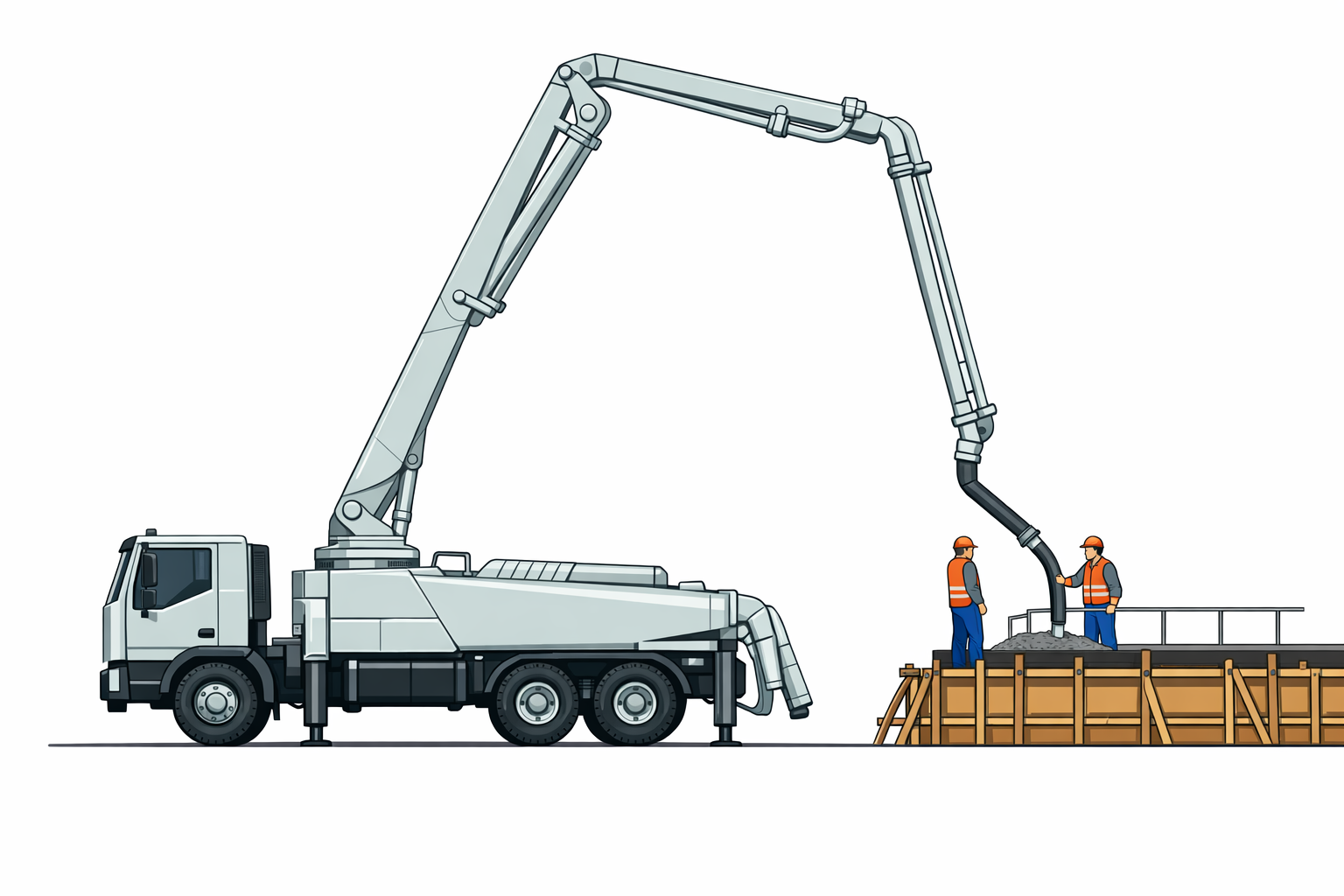
- Use boom placement directly over formwork whenever possible, to reduce manual dragging of hose.
- Plan pours in manageable sections to avoid long, continuous periods of raking or screeding across wide areas.
- Consult with engineers and designers early to select a concrete mix with appropriate slump for the placement method – low-slump (stiffer) mixes require much more manual force for raking, screeding and floating.
- Ensure formwork and reinforcement (reo bars/mesh) are arranged to minimise trip hazards and create safer movement paths.
- Schedule adequate crew size so workers can rotate task and take rest breaks.
- Position pump trucks and booms to minimise hose dragging across the site.
- Select hose lengths and end hoses that are suitable for the pour - avoid hoses that are excessively long or heavy.
- Ensure staffing levels support rotation and recover, particularly during large pours or hot weather conditions
Use mechanical aids wherever possible
Concrete pumps - to reduce manual pouring of concrete
Vibrating screeds – reduces manual effort compared to hand screeding
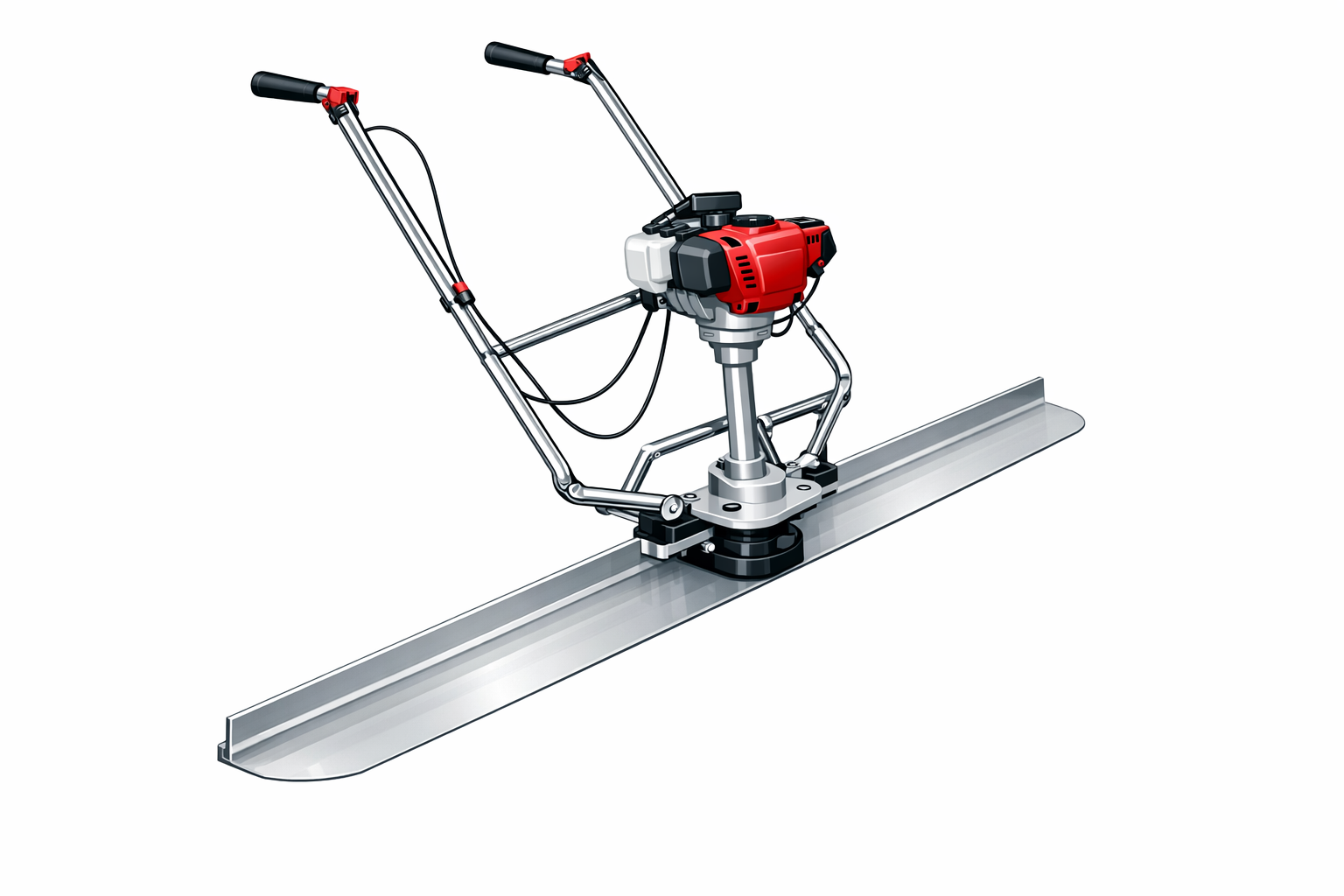
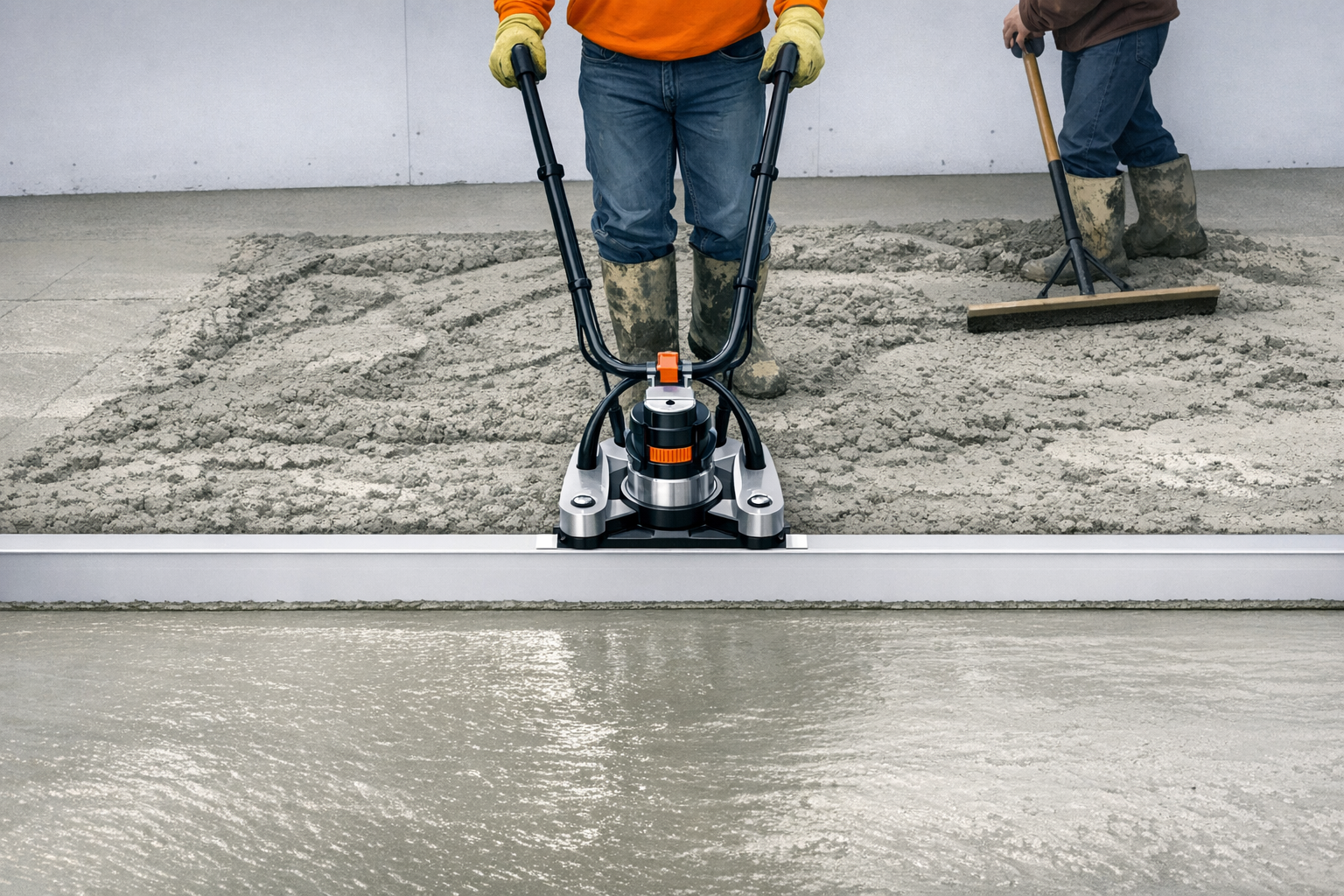
Longer beams require more control and space.
Power trowel machines (walk-behind or ride-on) - replaces manual trowelling for large areas.
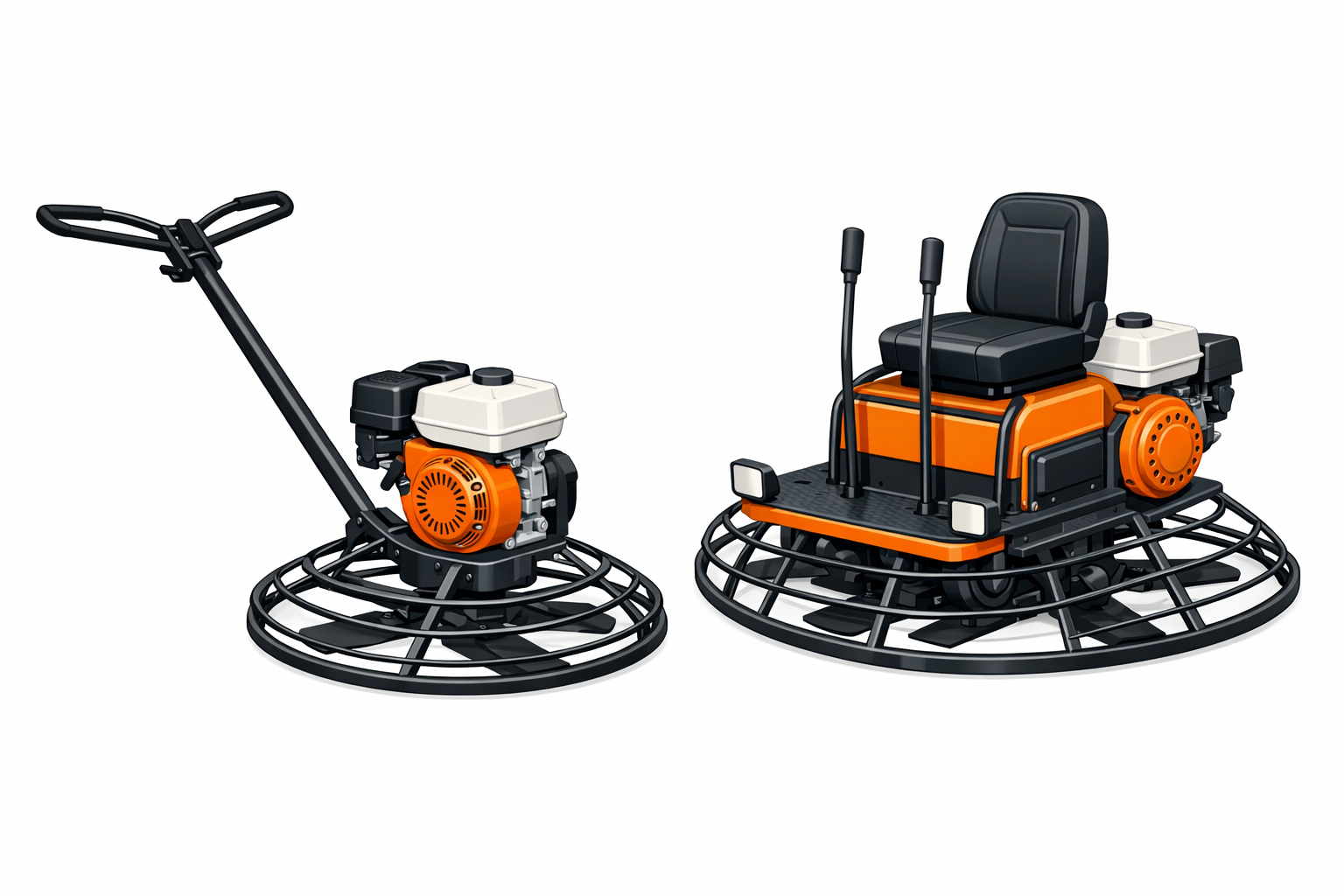
Ride-on models need sufficient slab size – check with the manufacturer
Other manual tools:
Hand floats and trowels
- Long-handled rakes and floats to reduce bending.
- Kneeling pads to work at ground level.
- Lightweight screeds and trowels with padded grips.
Administrative controls / work organisation
- Rotate workers between physically demanding tasks (hose handling, screeding, finishing) to spread the load and reduce repetitive strain.
- Schedule adequate breaks during large pours, particularly in hot or cold weather, to reduce fatigue.
- Maintain equipment and ensure vibration-damping handles are fitted where available.
- Monitor environmental conditions (e.g., heat, rain) and adjust work pace or provide additional support as needed.
- Ensure clear communication between pump operators, concreters and finishers to coordinate flow.
*Some images in this factsheet are computer generated for illustrative purposes only. They may not accurately represent actual workplaces, equipment, or work practices.