


What is the problem?
Manually lifting, carrying and installing large materials is a common task in construction, but it can easily lead to sprains and strains. These tasks often involve:
- Unloading sheets from delivery trucks
- Moving sheets across site
- Fixing sheets to walls and ceilings
Sheet materials are often large, awkward to grip and, depending on the type and size, can be heavy.
Sheets can be made from materials such as plasterboard, fibre cement or plywood, and typically range from 1200 mm x 2400 mm to 1350 mm x 6000 mm. Depending on the type and thickness, a single sheet may weigh from around 10 kg to over 40 kg, making them hazardous when handled manually.
What is the risk?
If not properly controlled, handling sheets can lead to musculoskeletal injuries, including sprains and strains to the back, shoulders, neck and hands. These risks arise from:
- Sustained, awkward postures caused by the size and shape of the sheets, including bending or twisting of the back, neck, and wrists, and wide, overhead reaching when fixing sheets to ceilings and walls
- High uneven force on one side of the body when lifting, unloading or handling large sheets
- Sustained force when holding sheets in place during installation (especially on ceilings)
- Awkward, forceful grips due to thin, sharp or rough sheet edges, which can lead to increased strain.
Injuries may happen suddenly or develop slowly over time from repeated exposure.
How to reduce the risk?
Site preparation - Planning ahead is a key
- Consider sheet dimensions and weight that are easier to handle, such as narrower or lighter sheets.
- Consider delivery access and storage location to minimise double handling and ensure clear access wherever possible.
- Communicate with the supplier on delivery timings and the availability of mechanical lifting aids such as forklifts, cranes, trolleys and panel lifters to assist with unloading.
- Check ground conditions to ensure they are suitable for the equipment used to transport sheets.
- Ensure the delivery truck can park close to the work area, with enough space for mechanical aids to operate safely.
- Store sheets as close as reasonably practicable to where they’ll be installed to limit unnecessary carrying and long travel distances.
- Consult with workers and subcontractors during planning to identify handling risks, agree on safe methods, and ensure everyone understands their role.
Use mechanical aids wherever possible
- Crane, forklift or other suitable plant – for unloading and moving packs.
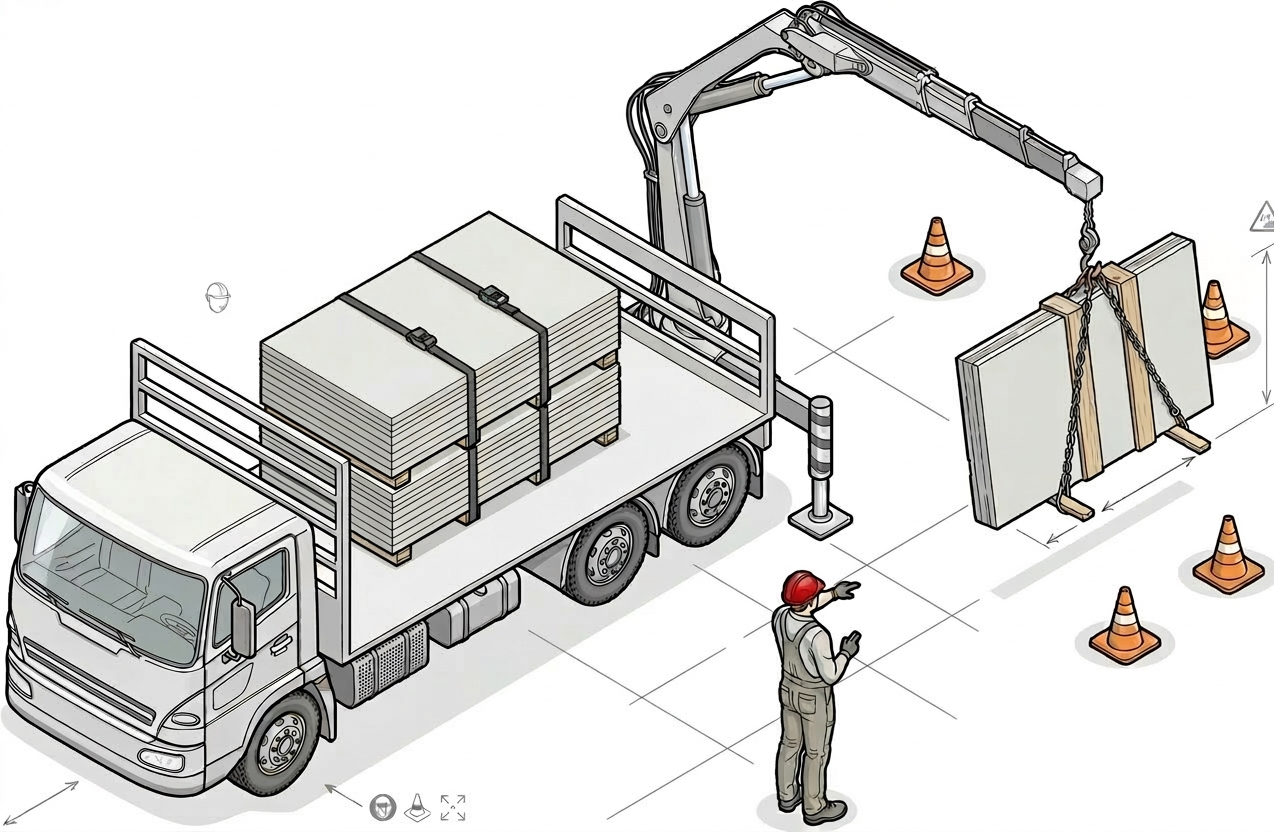
- Sheet trolleys – for transporting sheets across site.
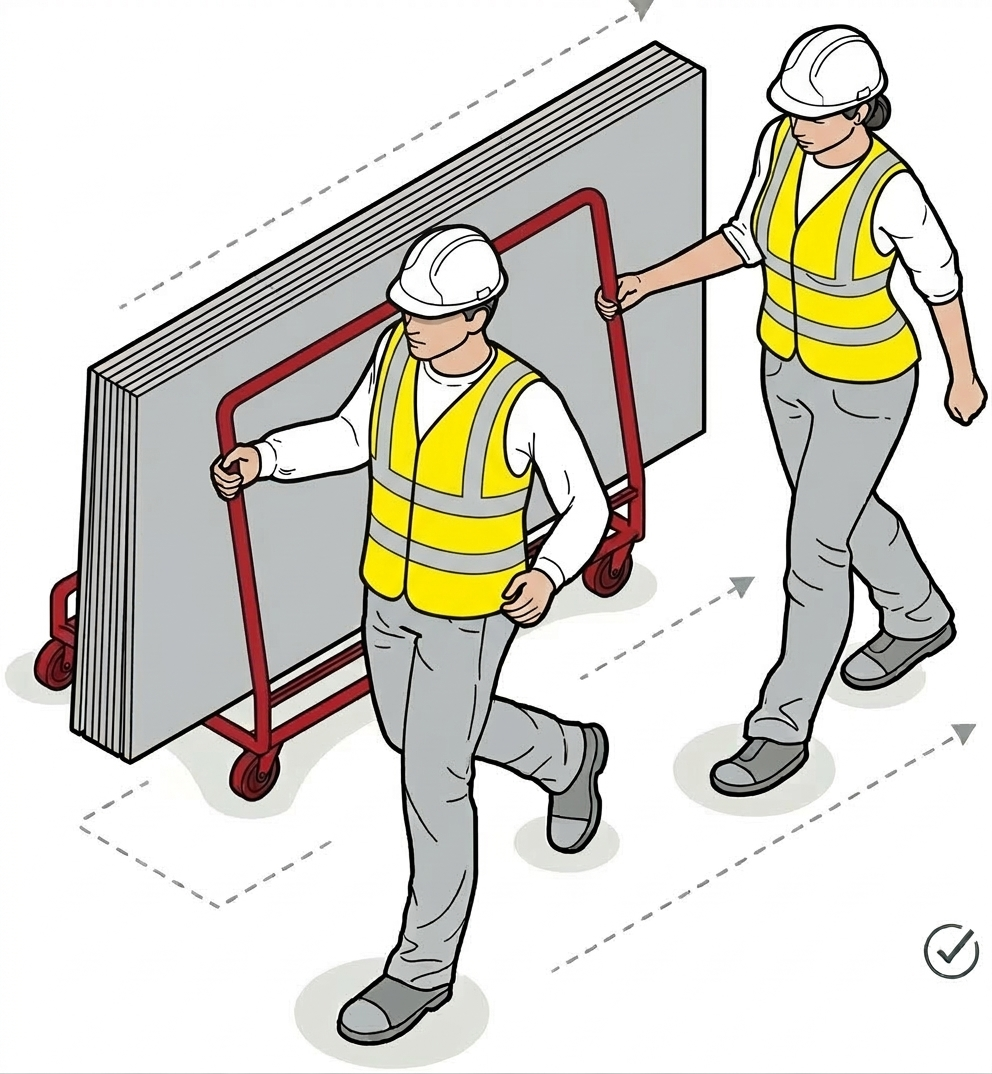 | 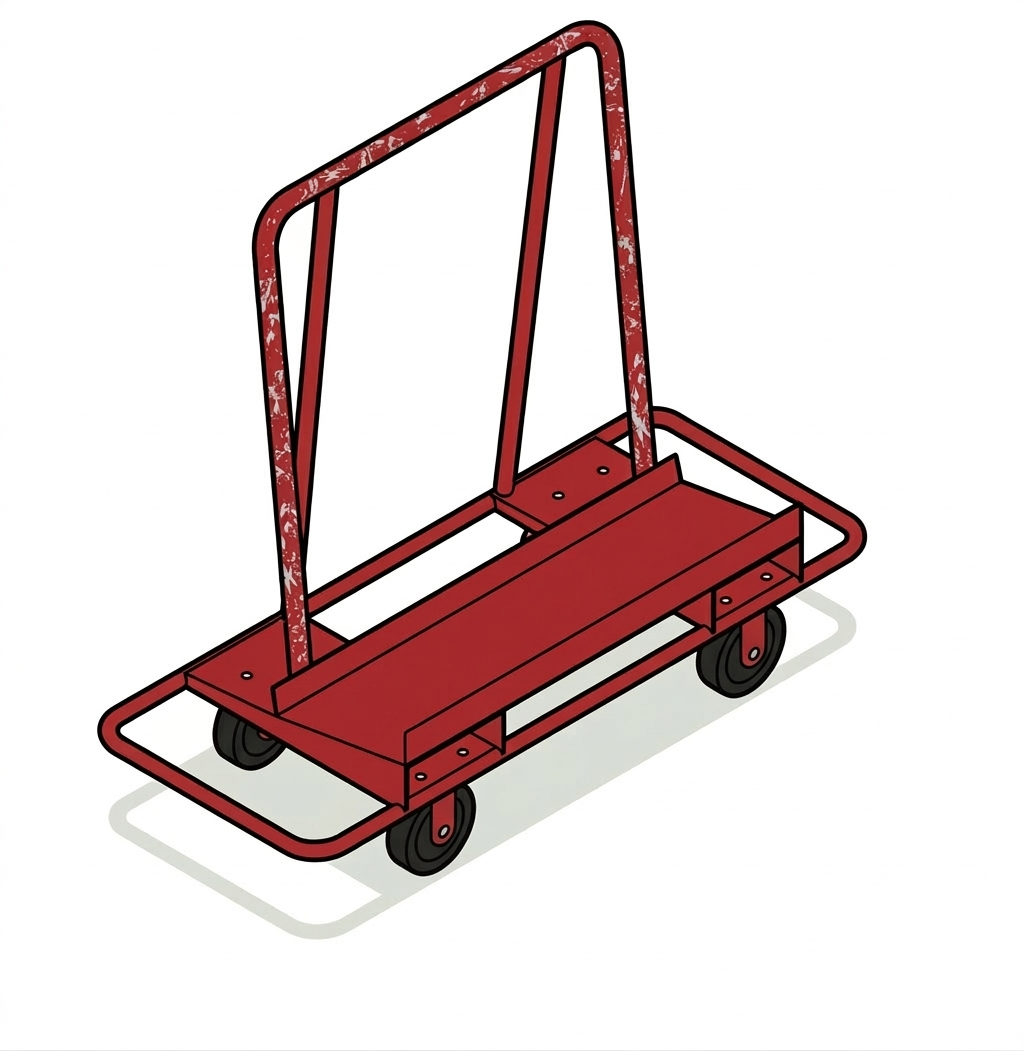 |
- Use heavy duty trolleys designed specifically for transporting long-sheet materials/panels.
- Follow the manufacturer recommendations:
- Load capacity / limits
- Castor type (suitable for uneven or rough surfaces)
- General condition and maintenance
- Don’t overload — follow manufacturer’s limits
- Move trolleys with two people: one guiding from the front, one supporting from the rear.
- Panel lifters – for moving and installing sheets onto ceilings and walls.
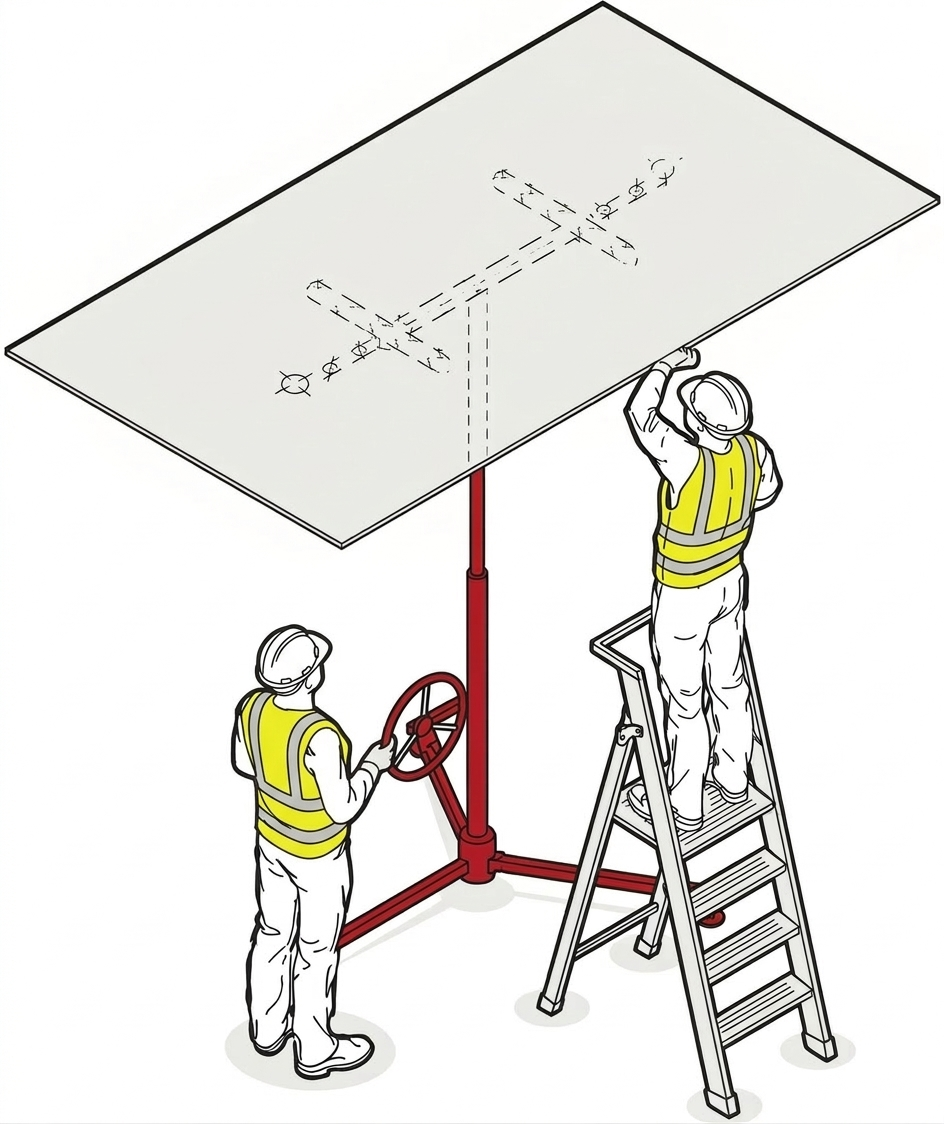
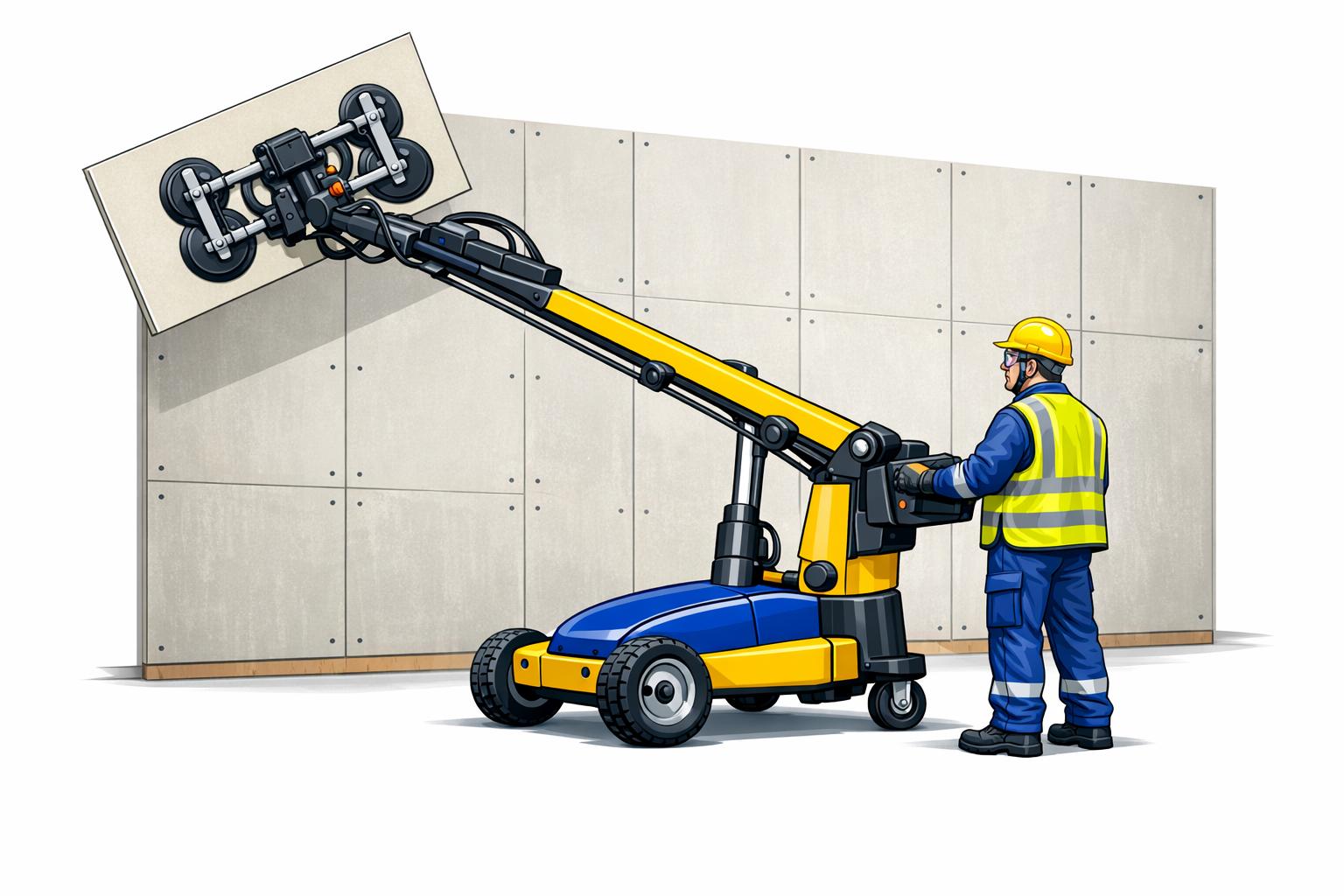
- Ensure lifters are:
- Well maintained
- Suitable for the sheet size and weight
- Used by trained workers
If plant or mechanical aids are not feasible, other strategies can assist with manual handling of sheets:
- Panel carriers – help maintain a more natural posture of the arms and wrists, improve grip, and reduce pressure during lifting and carrying.
|
|
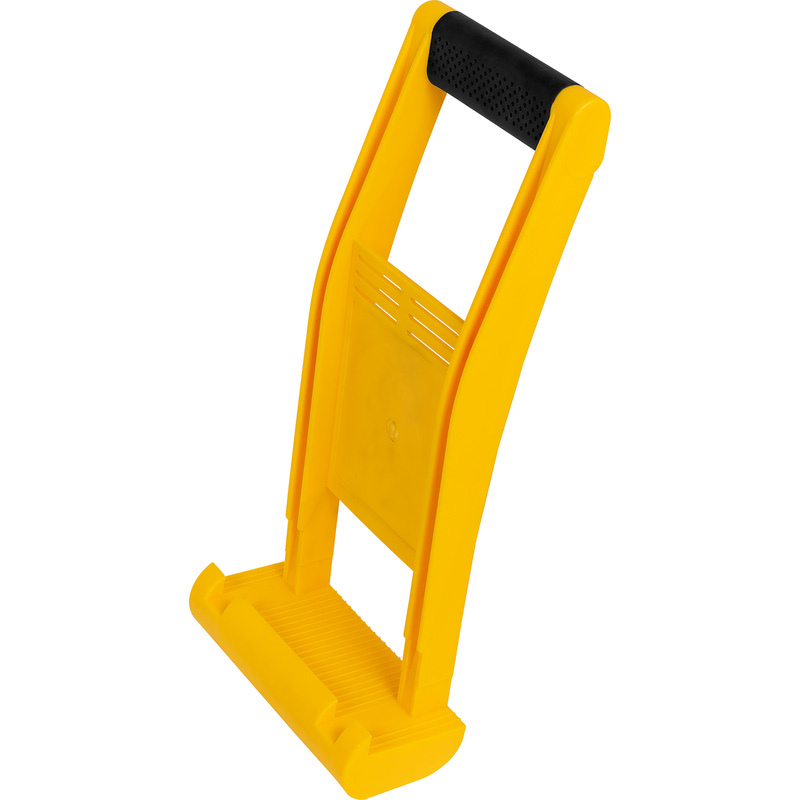
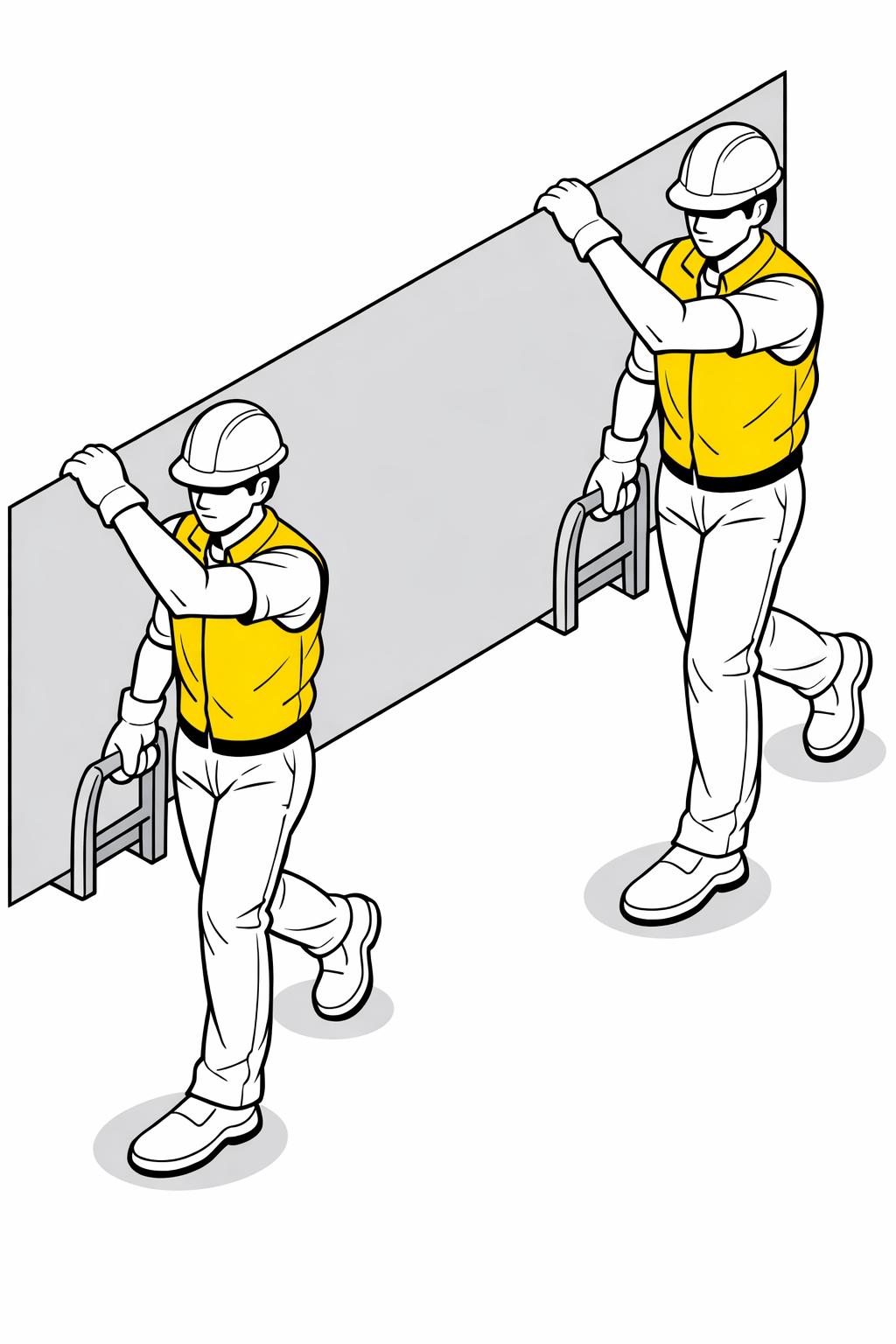
- Workers should work in teams of at least 2 when manually handling or unloading plasterboard.
Administrative measures – when manual handling of sheets is still required, consider what other work organisation could be implemented, including:
- Store sheets on bearers or stands to keep them off the ground and at a height that reduces bending and lifting from the ground.
- Plan the workflow to minimise the distance sheets are carried and include brief rest breaks to allow for grip adjustment and recovery.
- Rotate handling tasks between workers to reduce fatigue and limit prolonged exposure to heavy or awkward loads.
- Break up manual handling tasks to avoid long periods of continuous lifting, carrying or holding sheets in place.
- Provide suitable gloves that protect hands from sharp or rough edges and improve grip to reduce strain and the risk of dropping materials.
- Brief workers before starting work on sheet weight, size and balancing points and safe handling techniques (e.g., team handling / two person lifts).
- Assess the work environment and weather before handling large sheets, especially in windy conditions where control of the load may be compromised, increasing the risk of sudden strain or loss of balance.
*Some images in this factsheet are computer generated for illustrative purposes only. They may not accurately represent actual workplaces, equipment, or work practices.