


What is the problem?
Pushing wheelbarrows is a common manual task in construction and landscaping, but it can lead to sprains, strains, and fatigue. This task often involves:
- Loading and transporting soil, concrete, rubble, tools or other materials
- Navigating uneven ground, slopes and tight spaces
- Making repeated trips across worksites, often over long distances
Wheelbarrows can be awkward to control, especially when heavily loaded, unbalanced or poorly maintained. Single-wheel barrows are more prone to tipping and pushing uphill or across soft or rough ground greatly increases the effort required.
Loads vary widely depending on the material and volume. A full wheelbarrow of wet concrete can exceed 100 kg, and even lighter loads can become hazardous when terrain, weather or wheelbarrow condition increases physical effort.
What are the risks?
If not properly managed, pushing wheelbarrows can lead to musculoskeletal injuries, particularly affecting the back, shoulders, arms and legs. Common risk factors include:
- Sustained, high force exertion, especially when pushing uphill, through soft ground, or with heavy or uneven loads
- Forceful gripping of handles when controlling heavy or unstable loads, which can strain the wrist and forearms.
- Sudden jolts or instability when hitting obstacles, potholes, or uneven surfaces, increasing the risk of slips or overexertion
- Fatigue from frequent trips or long distances without breaks or task rotation
Injuries may happen suddenly (e.g. muscle strain from a heavy push) or develop slowly over time from repeated exposure.
How to reduce the risk?
Site preparation – Planning ahead is key
- Plan material movement routes to avoid steep slopes, soft ground, or tight corners. Aim for firm, level surfaces with clear access. Place boards to cover potholes or soft patches.
- Store material close to the work area to minimise travel distances.
- Reduce double handling by coordinating delivery and placing materials where they will be used, or directly into wheelbarrows where safe.
- Ensure adequate space for turning and tipping wheelbarrows safely, particularly in cluttered spaces.
- Check tyre pressure and condition before use, under-inflated or damaged tyres can increase the force needed to push or control the wheelbarrow.
- Inspect handles and trays to ensure they are secure and in good condition.
- Consult with workers and subcontractors to identify manual handling risks and agree on safe methods for transporting materials.
Choosing a suitable wheelbarrow
Motorised wheelbarrows or mini dumpers – reduce pushing force and improve control
|
|
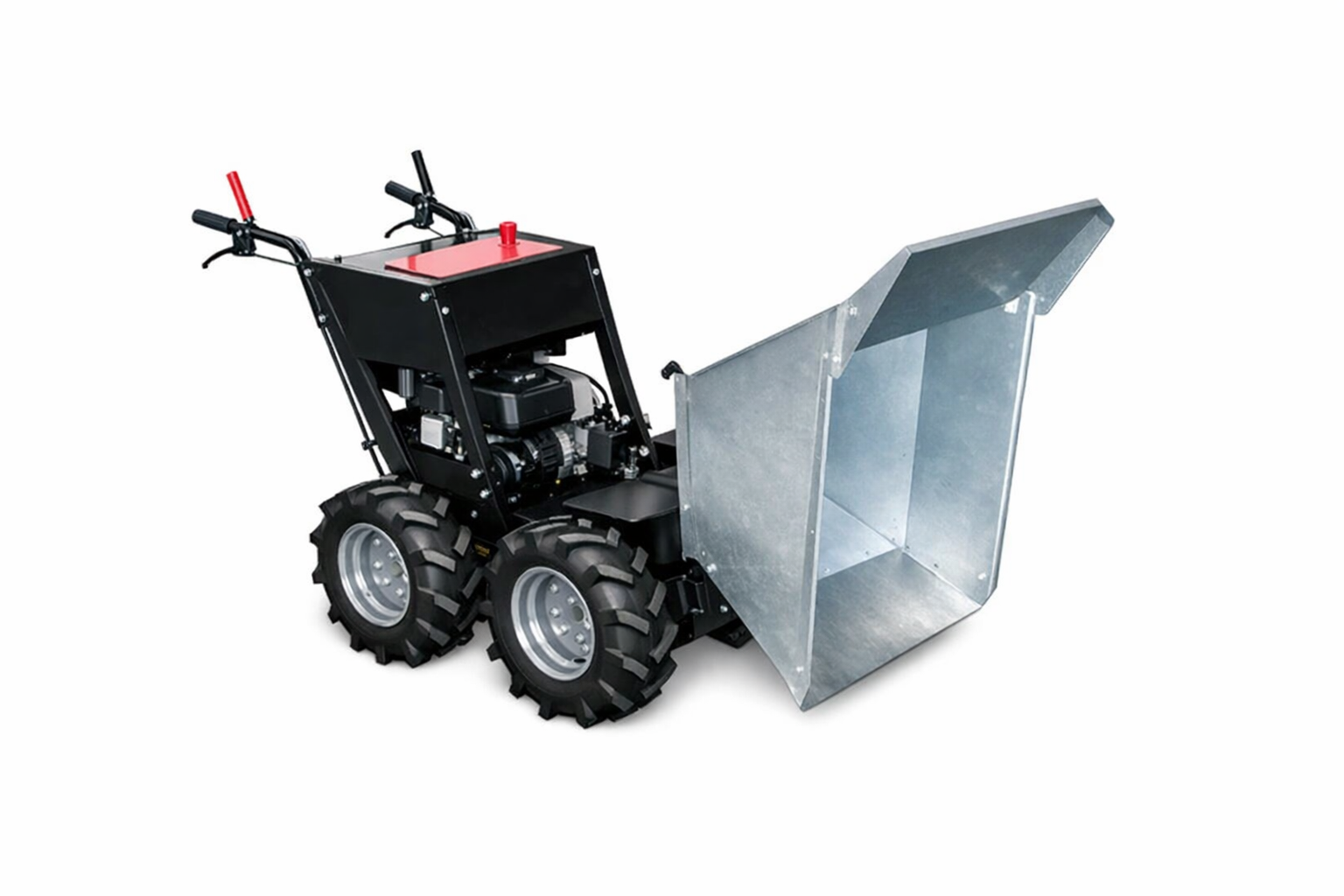
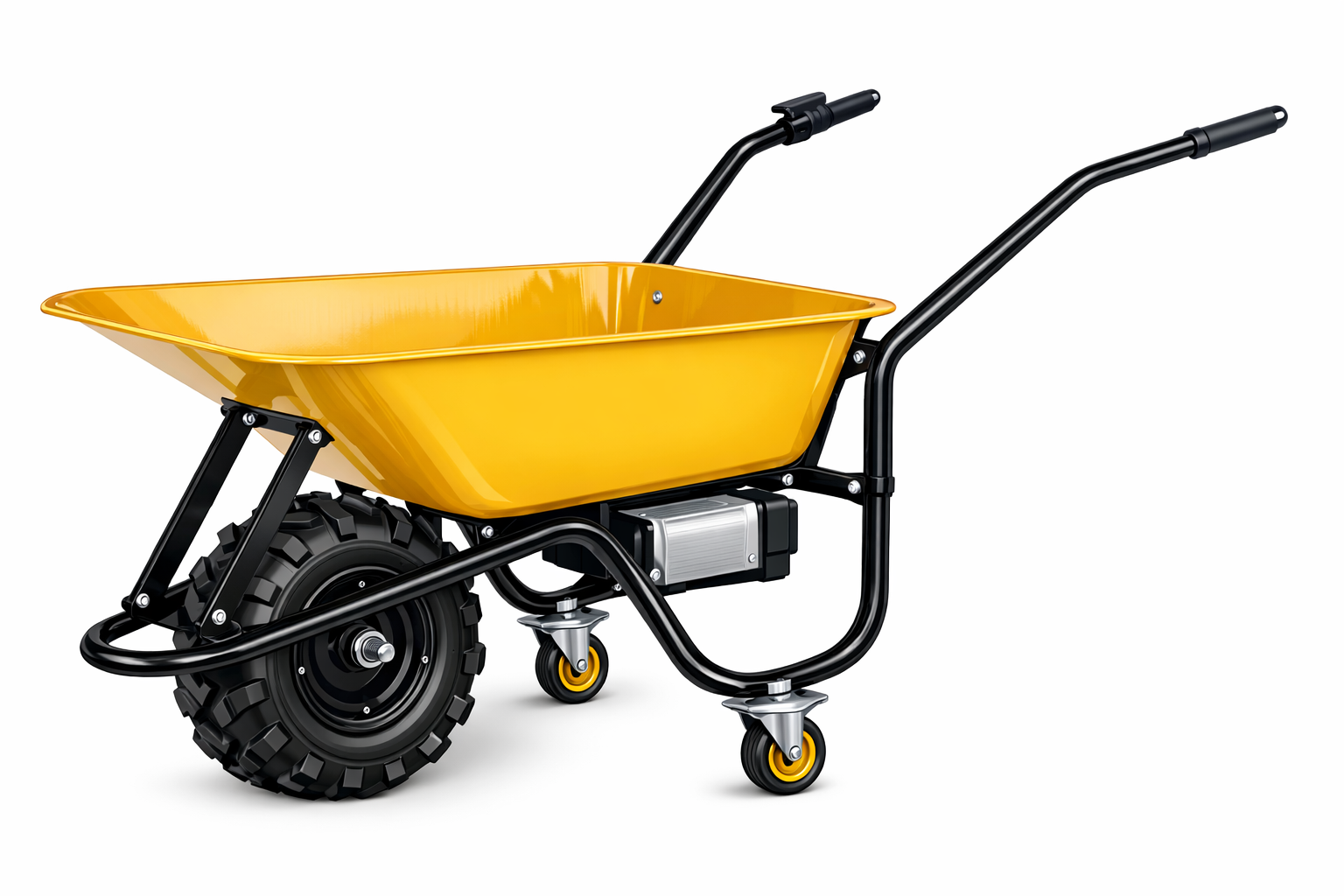
- Ensure equipment is well maintained and operated by trained workers.
- Use models with appropriate load capacity and terrain suitability.
Concrete buggies – for transporting wet concrete over longer distances
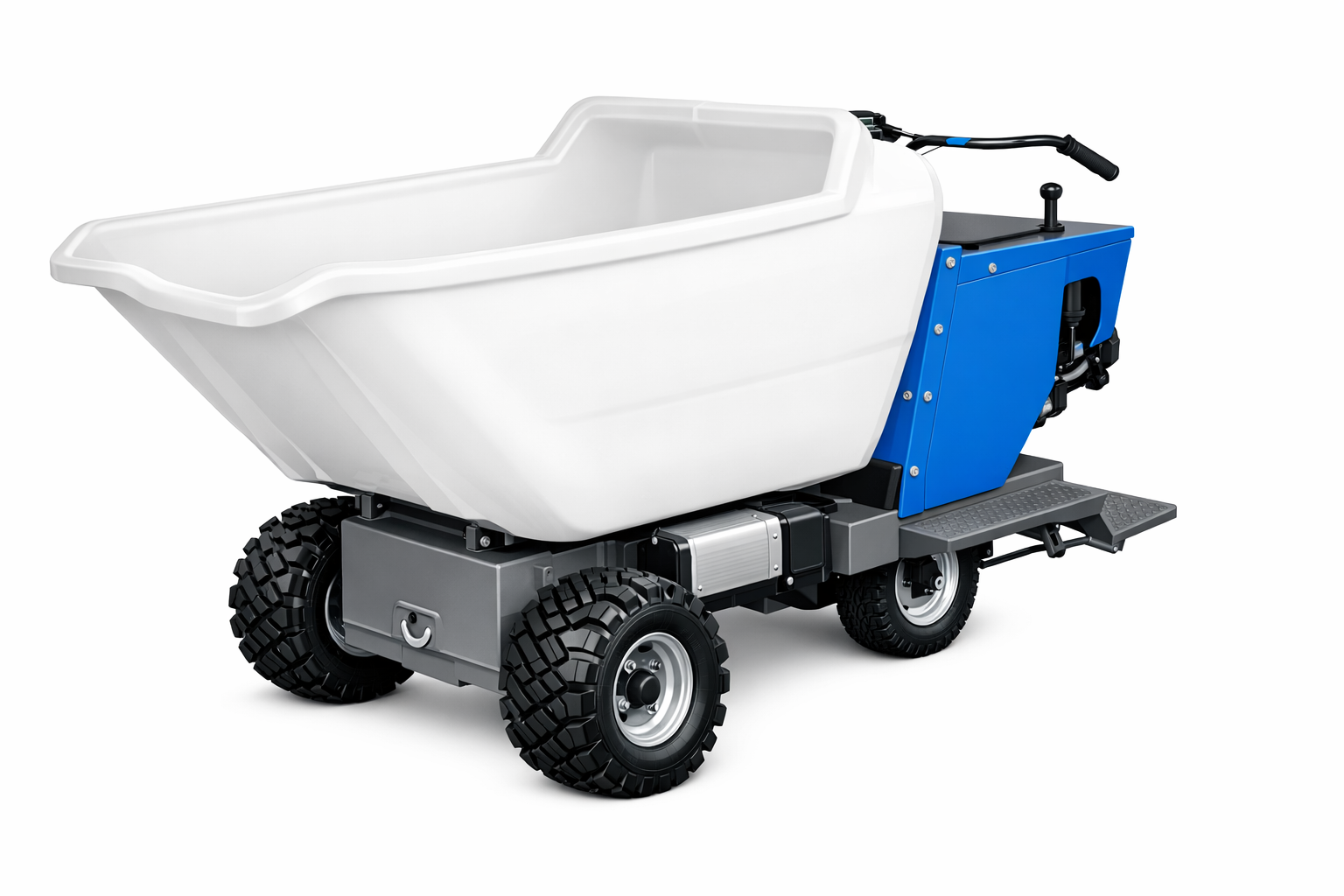
Heavy-duty contractor barrows – reinforced for transporting concrete, rubble, and other dense materials.
Other administrative controls, work considerations and safety practices when using wheelbarrows
- Regularly inspect and maintain wheelbarrows – check the general structure for any damages, wheels for proper inflation and damage, and moving parts for lubrication.
- Rotate tasks to reduce fatigue and exposure
- Schedule short rest breaks to allow muscle recovery
- Limit load weight – avoid overloading wheelbarrows. Use smaller loads and make more trips if needed.
- Balance the load – keep the bulk of the load centred over the wheel (axle) and distribute it evenly side-to-side. This reduces lifting and pushing forces and helps prevent tipping.
- Use safety gloves protect hands and provide a better grip.
Some images in this factsheet are computer generated for illustrative purposes only. They may not accurately represent actual workplaces, equipment, or work practices.