


A mobile crane is a crane capable of running over a supporting surface without the need for fixed runways (including railway tracks) and relying only on gravity for stability.
These are the general types of mobile crane operating in Australia:
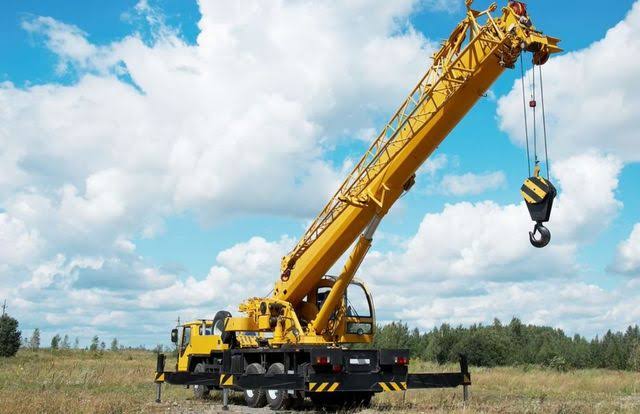
A slewing mobile crane is a mobile crane incorporating a boom or jib that can be slewed and can rotate its boom 360 degrees around a central axis. It can have either hydraulic telescoping booms or lattice. It does not include earth moving equipment such as a front‑end loader, backhoe, or excavator configured for crane operation. |
|
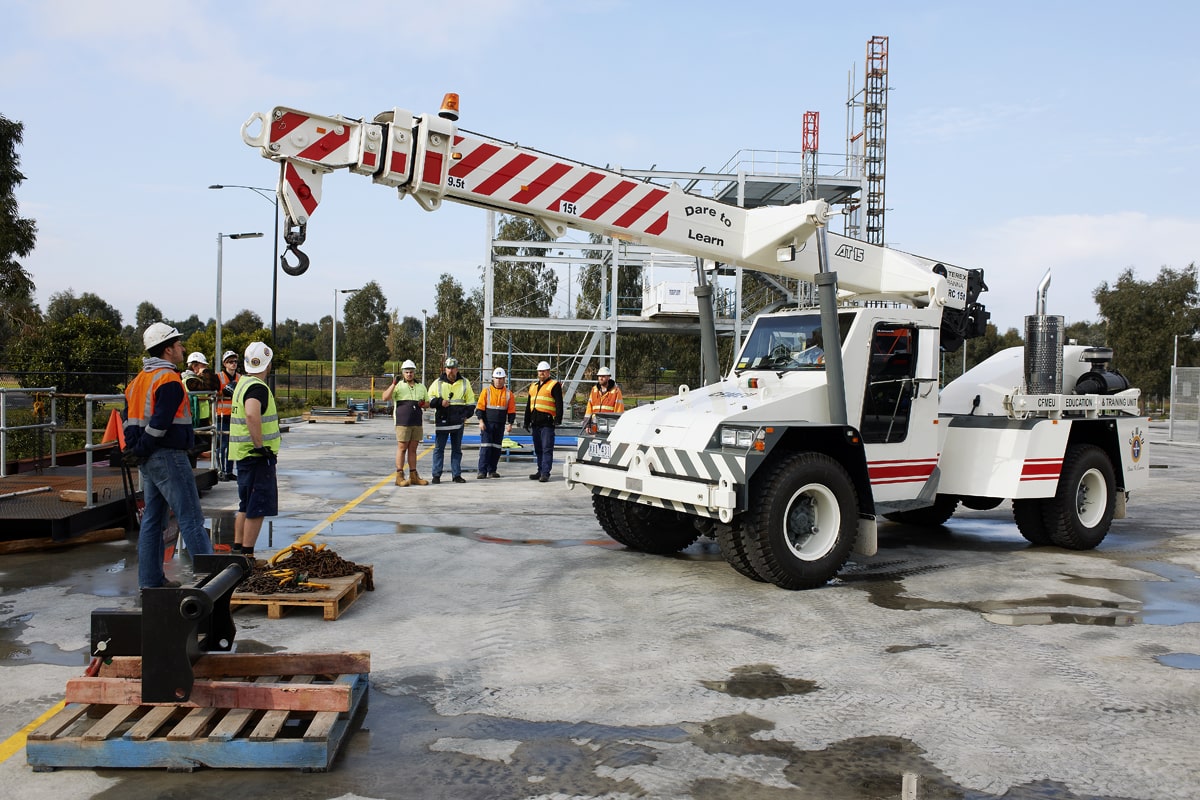
A non-slewing mobile crane - also known as a pick and carry crane - is a mobile crane incorporating a boom or jib that cannot be slewed and includes an articulated mobile crane, or a locomotive crane. A vehicle tow truck is not considered to be a non-slewing mobile crane. |
|
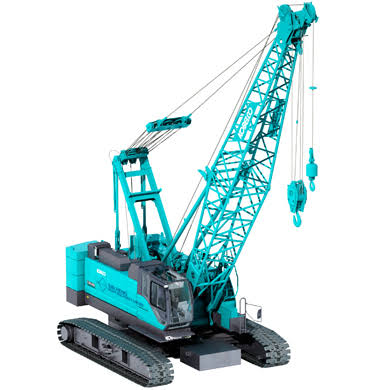
Lattice boom crawler cranes are heavy-duty lifting machines that use a welded steel frame (lattice) boom and a tracked undercarriage. Unlike telescopic cranes, they have a fixed boom length that is modified by adding or removing modular sections. |
|
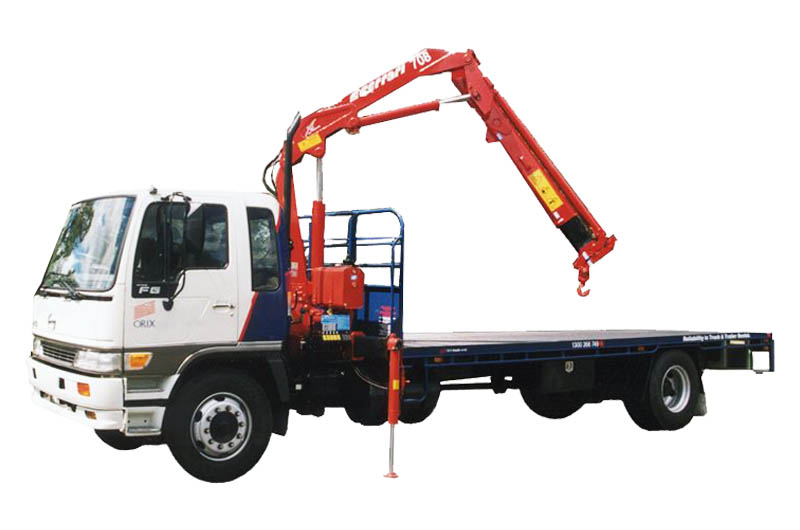
A vehicle loading crane (VLC) is a crane mounted on a vehicle for the purpose of loading and unloading that vehicle. |
|
Hazards
Mobile crane operations may present a risk of injury to workers and other people from:
Structural failure can result in people being struck or crushed by a crane part through the failure of any crane component, such as the boom, jib, hydraulic rams, or outriggers / stabilisers. A mobile crane may suffer structural failure if the crane has been overloaded or operated outside the approved area of its load chart. Structural failure may occur without warning.
A mobile crane is likely to overturn if the crane is operated outside of the stability area of its load chart. This may be further influenced by a number of factors including:
- poor ground conditions such as a supporting surface with inadequate bearing capacity.
- failure to use or fully extend outriggers or stabilisers.
- failure to level the crane.
- rapid slewing.
- high wind conditions that add windsail effect to the boom and/or lifted load.
Contact or collision with other plant and structures may occur where sufficient clearances are not maintained between the mobile crane other plant and structures, such as other cranes, buildings, and overhead powerlines.
Falling objects may result from erecting and dismantling activities, and the way loads are secured during lifting operations. They may present a risk of injury through people being struck by the load or falling objects from the load (e.g. materials, components) due to plant or equipment failure or operator error.
There is a risk of falls while accessing the crane or performing maintenance.
Safety requirements
Key safety requirements
- Safe Work Method Statements (SWMS): working with cranes in construction requires a site-specific High Risk Construction Work Safe Work Method Statement (SWMS) being implemented before work commences. See SWMS for high risk construction work | SafeWork SA.
- Training: ensure operators are trained on the specific crane controls, including emergency procedures, and are licenced and follow SOPs and SWMSs.
- Working with loads: never exceed the Working Load Limit and ensure loads are balanced and secured before lifting.
- Exclusion zones: ensure they are in in place.
- Communication: have an agreed system of communication with support personnel who have line of sight of the operator.
- Operation: avoid lifting over people and ensure travel paths are clear.
- Wind: monitor wind speeds and their effect on size and shape of the suspended load and crane boom.
Crane stability
Failure to maintain crane stability is one of the key factors associated with serious crane incidents. The main factors that affect crane stability include:
- operating the crane near its maximum rated capacity.
- ground conditions and the means of supporting the crane’s outrigger pads, tyres, or tracks.
- the slope of the ground—both side slope and slope in direction of crane travel (this particularly applies to non-slewing mobile cranes), and
- wind conditions—this will vary depending on the size and shape of the suspended load and crane boom.
Road travel
The crane manufacturer’s instructions should be followed when preparing a mobile crane for road travel to reduce the risk of injury to the crane operator and other people including pedestrians and other drivers.
Control measures for road travel include:
- checking tyre pressure.
- securing outriggers—both hydraulic and manual—with a locking device and stowing them in a travelling position to ensure there is no lateral movement.
- storing loose components in storage areas.
- disengaging drives to hydraulic pumps, booms and outriggers and putting the controls in the off position, and
- restraining the boom and hook to ensure there is no unintended movement of the boom or hook.
Crawler cranes
The ground pressure applied by crawler cranes is different to that applied by a crane on outriggers. It is sometimes assumed the ground pressure will be the same at any place where the track is in contact with the ground. In practice this is rarely the case.
When the crawler crane is being used with a suspended load the ground pressure will be greater under the boom of the crane. If there is no load suspended on the crane the ground pressure will be greater under the counterweight.
The distribution of ground pressure applied by a crawler crane will vary according to the working radius, load mass, counterweight mass, and slew.
Lattice boom mobile cranes
On lattice boom cranes the top of the extended boom should not be lowered to a point below the horizontal line that passes through its base pivot pin. If the boom tips below this plane the angle of pull of the boom luffing ropes could cause the boom to buckle before the boom begins to lift.
Lattice boom cranes should be operated according to the manufacturer’s instructions. Generally, they should not be moved uphill with an unloaded boom in the near vertical position. They should not be operated with the boom at an angle less than what is shown on the load chart, or hard against the boom backstop to avoid serious damage to the structural components of the boom—the boom backstop is an emergency safeguard only and should not be regarded as an operational stop.
Hydraulic boom mobile cranes
When operating the boom on hydraulic cranes make sure the boom sections are extended or retracted according to the manufacturer’s recommendations. Boom sections have failed by being extended contrary to manufacturer recommendations.
The crane should not be operated with the boom at an angle less than what is shown in the load chart.
Non-slewing mobile cranes
When mobiling a load the rated load capacity of the crane should be checked to ensure the crane is not overloaded. If necessary, the crane should be de-rated in accordance with the manufacturer’s instructions or those of a competent person.
The dogger should remain in sight of the crane operator. The dogger should not walk in the path of the crane or between the crane and the load.
High Risk Work Licence
A person who operates a mobile crane (other than non-slewing mobile cranes with a capacity of less than 3 tonnes) must hold the relevant High Risk Work Licence.
Registration
You must register mobile cranes and mobile crane designs with a rated capacity of more than 10 tonnes.
Mobile cranes requiring both design and plant item registration include:
- articulated cranes
- truck mounted cranes
- vehicle loading cranes (VLC)
- crawler cranes
Cranes that are manually powered do not require registration.
Registration costs can be found at Registration Fees.
Design registration
Plant design registration – Guidance notes
To register or alter the design of plant:
Plant design - New or alteration to design
The crane can be designed to any internationally recognised published technical standard with the following documents being required for the registration of the crane design:
- each crane model must have a separate design registration application form.
- a statement signed by the designer of the mobile crane stating:
- the designer has complied with their obligations under section 22 of the WHS Act.
- the published technical standards and engineering principles used in the design.
- design calculations and drawing(s) in English, as referenced in the designer's statement
- an independent design verification statement.
- payment of the fee which lasts for the life of the design (payable on completion of the online application).
Note:
- design registration applies to all plant items manufactured to the same design.
- design registration is valid for the life of the plant.
- manufacturers, importers, and suppliers of plant are prohibited from supplying plant unless the design of that plant is registered.
- design registration in SA is not required if the plant design is registered in another state under a corresponding WHS law (WHS Act 2012 (SA)).
- any alteration to the design of registered plant that may affect health, and safety requires an alteration to its design registration.
- where the mobile crane consists of a separate truck and crane then two design registrations are required, one for the design of the crane boom and one for the combination of the truck and crane (chassis and boom).
- a VLC requires two design registrations, one for the crane boom and one for the combination of the support structure (i.e. truck chassis) and crane boom.
Plant registration
Plant registration – Guidance notes
To register the item of plant:
Plant - Variation / Change of ownership
To register plant for the first time in South Australia or to renew lapsed registration, the following documentation will be required:
- a completed online application form including fee payment.
- a Design Registration Certificate, or a Design Approval Letter (issued pre-July 1996), or exemption letter issued by SafeWork SA to you the applicant (not transferable).
- a Statement from Competent Person that the plant is safe to use or operate (issued within 12 months of application date).
- date when plant item was first commissioned or first registered (whichever occurred first).
- Commissioning Report (prior to first use in Australia). If the plant being registered has been in service for more than 10 years, attach a copy of the Major Inspection Report (10-yearly) in lieu of a Commissioning Report.
- authorisation letter from the PCBU who will have management or control of plant (where the applicant is a third-party acting on behalf of the PCBU).
- registration of a VLC plant item must include a declaration from a competent person who has inspected and tested the combination of support structure and crane boom.
If you are applying for transfer of ownership of an existing SafeWork SA issued registration(s) the following documentation will be required:
- a completed online notification form lodged within 14 days of purchase.
- date when plant item was first commissioned or first registered (whichever occurred first).
- Statement from competent person that the plant is safe to use or operate (issued within 12 months of application date).
- if the plant being registered has been in service for more than 10 years, attach a copy of the Major Inspection Report (10-yearly) in lieu of a Commissioning Report.
- authorisation letter from the PCBU who will have management or control of plant (If applicable where the applicant is a third-party acting on behalf of the PCBU).
- letter from former owner confirming date that transfer of ownership occurred and that they no longer have management or control of the plant.
If you are applying to change the location of an existing SafeWork SA issued registration(s) the following documentation will be required:
- a completed online notification form lodged within 14 days of becoming aware of the change.
- if the plant being registered has been in service for more than 10 years, attach a major inspection report (10-yearly).
- authorisation letter from the PCBU who will have management or control of plant (If applicable where the applicant is a third-party acting on behalf of the PCBU).
If you are applying to make changes to other information of an existing SafeWork SA issued registration(s) the following documentation will be required:
- a completed online notification form lodged within 14 days of becoming aware of change(s).
- where the change relates to a design alteration, then a copy of the design registration for the alteration and any relevant changes to recorded information
- statement from competent person that the plant is safe to use or operate reflecting the updated information (if applicable).
- if the crane being registered has been in service for more than 10 years, attach a copy of the Major Inspection Report (10-yearly).
- authorisation letter from the PCBU who will have management or control of plant (If applicable where the applicant is a third-party acting on behalf of the PCBU).
Note:
- SafeWork SA will notify plant registration holders in writing around one month prior to renewals being due. In making a decision to grant the renewal of a plant item registration, SafeWork SA will consider whether the plant has been regularly maintained and inspected in accordance with WHS Regulation 213 and 235.
Change of details
You must provide us with written notice within 14 days if:
- you change your name or address, or any other information stated on your application for registration
- the plant design has been altered to an extent where it is subject to new control measures
Inspection and maintenance
A preventative maintenance program must be in place, taking into account the working environment, frequency and severity of use of the plant. It needs to be carried out according to the manufacturer’s specifications and Australian standards (i.e. AS 2550.1, AS 2550.5, for VLCs it is AS 2550.11), with inspections carried out by a competent person such as:
(a) Pre-operational inspection: before the beginning of each work shift or change of operator.
(b) Routine inspection: conducted at intervals of 3 months.
(c) Periodic inspection: conducted at intervals of 12 months.
(d) Major inspection: see below:
According to WHS Regulation 235 – Major Inspection of Registered Mobile Cranes and Tower Cranes, the person with management or control of a registered mobile crane or tower crane at a workplace must ensure that a major inspection of the crane is carried out by, or under the supervision of, a competent person:
- at the end of the design life recommended by the manufacturer for the crane; or
- if there are no manufacturer's recommendations—in accordance with the recommendations of a competent person; or
- if it is not reasonably practicable to comply with paragraph (a) or (b)—every 10 years from the date that the crane was first commissioned or first registered, whichever occurred first.
In WHS Regulation 235, a major inspection means:
- an examination of all critical components of the crane, if necessary, by stripping down the crane and removing paint, grease and corrosion to allow a thorough examination of each critical component; and
- a check of the effective and safe operation of the crane.
For further information: Safe Work Australia Guide to inspecting and maintaining cranes.
Record keeping
A record (e.g. logbook) of the service and maintenance history of the plant needs to be kept and made readily available and be written in easy-to-understand English.
Refer to AS 2550.5 (for VLCs it is AS 2550.11) and WHS Regulation 237.
Contact us
Visit: safework.sa.gov.au
Call: SafeWork Licensing Unit on 1300 365 255
Email: licensing.safework@sa.gov.au
Further information
SafeWork SA
- Crane Safety Self-Assessment Tool
- SWMS for high risk construction work
- High Risk Work Licence
- Operating cranes in protected airspace
Resources
- Guide mobile cranes - SafeWork Australia
- General guide cranes - SafeWork Australia
- Cranes guidance material - SafeWork Australia
- Guide inspecting and maintaining cranes - SafeWork Australia
- Vehicle loading cranes information sheet - SafeWork Australia
- Using powered mobile plant crane information sheet - SafeWork Australia
- Guidance material for the safe design, manufacture, import and supply of plant - Safe Work Australia
- Guide for crane operators - SafeWork NSW
- Mobile crane safety for PCBUs - SafeWork NSW
- Mobile crane tech guide note - WorkSafe QLD
- Safe operation of mobile cranes - WorkSafe QLD
- Vehicle loading cranes - NT WorkSafe
- Working safely near overhead powerlines - OTR SA
Legislation
- WHS Act 22 - Duties of PCBUs that design plant, substances or structures
- WHS Regulation 213 – Maintenance and inspection of plant
- WHS Regulation 219 (3) – Plant that lifts or suspends loads
- WHS Regulation 235 and 714 – Major inspection of registered mobile cranes and tower cranes
- WHS Regulation 237 – Records of plant
- WHS Regulation 244 – Altered plant designs to be registered
Australian Standards
- AS 1418.1: Cranes, hoists and winches – General requirements
- AS 1418.5: Cranes, hoists and winches: – Safe use: Mobile cranes
- AS 1418.11: Cranes, hoists and winches – Vehicle-loading cranes
- AS 2550: Cranes, hoists and winches - Safe use
- AS 2550.1: Cranes, hoists and winches – Safe use: General requirements
- AS 2550.5: Cranes, hoists and winches – Safe use: Mobile cranes
- AS 2550.11: Cranes, hoists and winches – Vehicle-loading cranes
- AS 2759: Steel wire rope – Use, operation and maintenance
- AS 4991: Lifting devices
Codes of Practice
- Mobile crane code of practice WorkSafe QLD - reference only as it is not approved in South Australia.
- Construction Work – Model Code of Practice – SafeWork Australia – reference only as it is not approved in South Australia.
- Working in the vicinity of overhead and underground electric lines - SafeWork Australia – reference only as it is not approved in South Australia.
- Managing psychosocial hazards at work
- Managing the risk of falls at workplaces
- How to manage work health and safety risks
- Managing noise and preventing hearing loss at work
- Managing the risks of plant in the workplace
FAQ - Frequently Asked Questions
Q1. What are the registration requirements for mobile cranes?
In South Australia all mobile cranes are classified as high risk plant under the Work Health and Safety legislation (WHS Reg. Schedule 5 Part 1). Every mobile crane must hold design registration and item of plant registration before they are placed into service.
The crane supplier (who may also be the importer) has the legal duty to ensure the crane design is registered, and that they hold a copy of the design registration certificate prior to any distribution and sale of the crane.
The design registration number issued by SafeWork SA or an interstate regulator is unique to that model of mobile crane and must be permanently marked on the crane.
The owner or person with management control of the mobile crane is responsible for the item of plant registration. They will need copies of the design registration certificate, “Safe to Operate” certificate and commissioning report. They can then attach all the supporting documentation to a completed application form and send it to SafeWork SA along with payment of the fee.
Q2. Are there any registration fees?
Cranes incur a fee when they are first design registered which is valid for the life of the plant.
A design registration fee applies only once for the initial application because upon issue there is no expiry date.
Cranes incur a fee each time they are plant item registered for a 5-year period. The owner will receive an invoice from SafeWork SA before the renewal date. The invoice will have an associated fee.
Plant registration will remain valid for the 5-year period unless the crane is sold, scrapped, or a design alteration occurs to the level of safety requiring a review of risk control measures.
Q3. Who can apply for design registration?
- a person conducting a business or undertaking (PCBU) that designs an item of plant may apply to the regulator for the registration of the design of that item of plant.
- a person with management or control of an item of plant at a workplace may apply to the regulator for the registration of the design of that item of plant.
Q4. Duties of the Designer and Design Verifier.
The designer must undertake a design risk assessment and be satisfied through engineering calculations that the crane is at the appropriate level of safety in accordance with the published technical standards and/or engineering principles being used. The designer must declare that they “have complied with the designer’s obligations under Section 22 of the WHS Act in respect to the design of the plant.”
For design verification under regulation 252, a Design Verifier is a person who has the skills, qualifications, competence and experience to design the plant or verify the design
The Design Verifier has the important role of determining through their own independent assessment that the design satisfactorily complies with design intent published technical standards, and/or engineering principles. They must also declare that “they were not involved in the production of the design; and that the design was produced in accordance with the published technical standards and/or engineering principles specified by the designer’s statement and documents.”
The crane original design can be to any internationally recognised published technical standard including calculations and drawings. However, Design verification must declare full compliance with AS 1418.1 and AS 1418.5.
Q5. Does each mobile crane require individual design registration?
No, once the design is registered, there is no restriction on the number of mobile cranes that can be supplied, provided they comply with the registered design and there has been no design alteration. The registration holder must ensure the design registration number is provided with each mobile crane that is supplied.
Q6. Is interstate design registration recognised in South Australia?
Yes, interstate design registrations issued under a corresponding WHS law (i.e. a law of another Australian jurisdiction corresponding, or substantially corresponding, to the WHS Act 2012 (SA)) are recognised in South Australia. However, it is important to ensure the mobile crane design also complies with relevant South Australian Approved Codes of Practice.
There may be Australian States or Territories who have introduced specific variations to the WHS model legislation and while the design may comply with the legislation in those jurisdictions, it may no longer fully comply with South Australian requirements. If this is the case, item of plant registration may be refused (i.e. design registration may not be recognised) because the design does not fully comply through a corresponding WHS law equivalent to that in South Australia.
Q7. Are overseas design registrations recognised?
Every crane installed in South Australia must have an Australian design registration.
Q8. When is an application for alteration to a design of a mobile crane required?
The WHS Regulations state that “a reference to the alteration of a design is a reference to an alteration that may affect health or safety.”
What does that mean?
'Alter' in relation to any plant means to change the design of, add to or take away from the plant where the change may affect health or safety, but does not include routine maintenance, repairs or replacements.
When a crane is first design registered, the design is based on certain criteria and specifications that set a minimum level of safety. If that level of safety is altered, then an application for the alteration must be submitted to SafeWork SA. Below are some changes that may affect the level of safety:
- Structural modifications: changes to the crane’s boom, chassis, outriggers or counterweights that affect load-bearing capacity or stability. This includes extending the boom, adding sections or modifying the frame.
- Mechanical or Hydraulic Changes: alterations to lifting mechanisms, winches, hoists or hydraulic systems that impact performance or rated load.
- Rated Capacity Adjustments: any modification that changes the crane’s maximum lifting capacity, load charts or operational limits.
- Safety System Upgrades: installing or modifying safety devices such as load moment indicators, limit switches, or emergency braking systems that affect operational safety.
Note: alterations must be compliant to the most current published technical standard.
Q9. Does each manufactured mobile crane require item of plant registration?
Yes, each crane must be individually registered before being placed into service.
The item of plant registration number issued by SafeWork SA is specific to that crane.
The design registration number issued by SafeWork SA or an interstate regulator is unique to that model of crane and must be permanently marked on the crane.
Q11. What information should the Commissioning Report contain?
A commissioning report contains the technical information from the final manufacturer’s set up of a crane. The type and extent of the tests are based on the manufacturer’s instructions and the mandatory requirements from the technical design standard.
The data contained in the commissioning report is evidence that all the appropriate tests have been conducted and the results are in accordance with the manufacturer’s instructions and the technical standard applicable.
Q12. What happens after I submit an application for item of plant registration?
After SafeWork SA receives an application and fee payment has been receipted:
- SafeWork SA will audit each section of the application form and supporting documentation. It is important that correct information is provided.
- If any information is missing, SafeWork SA will contact the applicant. This may cause delays in processing.
- Once details are audited and any additional requested information and/or revised documents received the application will be processed and the plant registered.
- A registration document (certificate) will be sent to the applicant. The document will contain information as submitted in the application form, the applicant details and the issued item of plant registration number. The registration number must be displayed on or near the mobile crane.
- The item of plant registration is valid for a 5-year term. When renewal is due, an invoice will be sent about one month before the registration expires to the recorded address of the registration holder.